McLean Demolition is a Class A DPOR-licensed demolition contractor serving Arlington, VA with 14 years of experience and more than 600 completed projects across Northern Virginia. We handle full residential teardowns in Lyon Village and Cherrydale, selective interior demolition in Ballston and Clarendon townhomes, and commercial demolition in the Rosslyn and Shirlington corridors. Our team coordinates directly with Arlington County DES for all required demolition permits so your project moves without delays.
Arlington property owners trust us for residential demolition, interior and selective demolition, commercial demo, concrete removal, deck and patio removal, chimney removal, asbestos abatement, debris removal, and site preparation. We bring equipment sized for tight urban lots, narrow alleys, and HOA-managed communities throughout the county. Whether you are tearing down a mid-century rambler to build new or gutting a 1960s Buckingham apartment for a full renovation, we handle it start to finish.
Full house demolition in Arlington typically runs $9,400–$19,800 depending on structure size and ACM content. Interior demolition runs $2–$8 per square foot, and concrete removal runs $2–$6 per square foot. Call us for a free on-site estimate and we will walk through the scope, timeline, and permit requirements specific to your Arlington property.
McLean Demolition provides a full range of demolition and site clearance services throughout Arlington County, from Rosslyn and Ballston to Shirlington and Aurora Hills. Every project is staffed by our own licensed crew with the equipment and permitting knowledge to work safely and efficiently on Arlington's compact urban lots.
Arlington's housing stock of mid-century ramblers, Cape Cods, and post-war colonials is seeing heavy teardown-rebuild activity in Lyon Village, Cherrydale, and Westover as owners on premium lots choose new construction over costly renovation of aging structures. We handle full structure demolition from foundation to grade, including below-grade slab removal and utility disconnection coordination with Dominion, Washington Gas, and Arlington County DES water and sewer. Before any swing, we conduct a pre-demolition hazardous material survey to identify ACMs including floor tiles, pipe insulation, and textured ceiling material common in pre-1980 construction. Full residential teardowns in Arlington typically cost $9,400–$19,800 depending on square footage, foundation type, and ACM abatement requirements. All permits are filed with Arlington County DES before work begins. Our crew demolishes, and hauls debris to licensed disposal facilities, leaving a clean graded lot ready for your builder.
Interior demolition is high-demand work in Arlington's walkup apartments, Clarendon townhomes, and older Buckingham-area condos being brought back to studs for full renovation. Our selective demolition crew removes non-structural walls, flooring, ceilings, cabinetry, plumbing fixtures, and mechanical systems while protecting the structural envelope and adjacent occupied units. We use hand tools and small electric equipment in tight urban spaces where a full excavator cannot access the work zone, keeping dust, noise, and disruption to neighboring units at a minimum. Pricing runs $2–$8 per square foot depending on the complexity of material separation and ACM content. Arlington County DES requires a building permit for most interior demolition involving structural members or utilities. We handle the permit process as part of every project.
The Rosslyn, Ballston, and Shirlington corridors are among the most active commercial redevelopment zones in Northern Virginia, and McLean Demolition holds the Class A DPOR licensing and equipment to work in those environments. Commercial demolition in Arlington requires ASHRAE 100 hazardous material surveys before any work on pre-2000 buildings, and we coordinate those assessments as part of our pre-construction process. We perform structural demolition, interior selective demo, core drilling, saw cutting, and floor grinding for tenant buildouts, office repositioning, and full building teardowns in urban sites where debris cannot be staged the way rural projects allow. Urban site constraints in Rosslyn and Ballston mean we sequence debris removal with same-day haul-off to keep the footprint clean and neighboring businesses unobstructed. Commercial projects are priced on a full scope basis after a site walkthrough. Call (571) 506-2219 to schedule.
Post-demolition debris removal is a critical part of every project we complete in Arlington, where tight lots and active alley systems make clean-site management a daily priority. We haul mixed construction debris, concrete, masonry, stripped interior materials, and yard waste to licensed facilities in loads priced at $100–$800 per truckload depending on material type and volume. For projects where another contractor has completed demolition but left debris, we also provide standalone haul-off services with same-day or next-day scheduling. Our drivers are familiar with Arlington County truck routes and weight restrictions, and we separate recyclable materials including clean concrete and scrap metal from general debris where possible. All debris is disposed of at licensed Northern Virginia facilities in compliance with VDEQ requirements.
Arlington County is one of the most densely developed jurisdictions in Virginia, with a housing stock ranging from early-20th-century bungalows in Westover and Cherrydale to mid-century ramblers throughout Lyon Village, Buckingham, and Nauck, and modern townhome infill in Ballston and Clarendon. The county's proximity to Washington, D.C. and continued Metro-driven development pressure has pushed property values to levels where teardown-rebuild is frequently the most economically rational path for owners of small, aging homes on premium lots. Rosslyn, Ballston, and Shirlington are sustaining commercial redevelopment at a high pace, while neighborhoods like Aurora Hills and Nauck are in residential renovation cycles driven by long-term owners and new buyers upgrading or rebuilding existing structures.
Demolition in Arlington presents distinct operational challenges compared to suburban Fairfax County. Lot sizes in older neighborhoods are tight, often 5,000–7,500 square feet, with structures built close to property lines and minimal room for equipment staging. Many properties adjoin shared alleys, requiring careful planning to keep access open for neighboring residents. Urban noise ordinances restrict early-morning and late-evening equipment operation, which we account for in scheduling. Pre-1980 construction throughout Lyon Village, Westover, and Buckingham commonly contains asbestos-containing materials including 9-inch floor tiles, pipe wrap insulation, joint compound, and vermiculite attic insulation, all of which require NESHAP-compliant testing and licensed abatement before demolition work begins.
McLean Demolition has worked extensively in Arlington County over our 14-year history, developing working relationships with Arlington County DES permit staff and utility contacts at Dominion, Washington Gas, and Arlington County water and sewer. We know the specific requirements of the DEMOC permit application in Arlington, the documentation needed for historic district reviews in certain Lyon Village blocks, and the stormwater management expectations the county applies to sites where demolition disturbs more than 2,500 square feet of land cover. That local experience means fewer surprises and faster permit approvals for your project.
Every Arlington project begins with a free on-site visit where we assess the structure, access conditions, and proximity to adjacent buildings and utilities. For any structure built before 1980, we coordinate a licensed asbestos and lead-paint survey, which typically takes 3–5 business days and is required by Arlington County DES before a demolition permit will be issued. We document findings and, where ACMs are present, incorporate abatement into the project scope and pricing so you have a complete picture before approving work. Homes in Lyon Village, Westover, and Buckingham almost always require some level of ACM testing given their construction era.
Arlington County's Department of Environmental Services handles demolition permits, and the process differs meaningfully from Fairfax County's PLUS online system. We prepare and file the DEMOC demolition permit application, including site plans, utility disconnection documentation, and any required hazardous material survey results, and we track the permit status and respond to any county comments on your behalf. Permit turnaround from Arlington County DES typically runs 2–4 weeks for standard residential projects, though commercial projects or those in historic review zones may take longer. Properties in certain Lyon Village blocks may require additional review by the county's historic preservation office before the permit is issued.
Before equipment arrives on site, all utilities must be disconnected and capped at the main. We coordinate disconnection scheduling with Dominion Energy, Washington Gas, and Arlington County water and sewer, which typically requires 1–3 weeks of lead time depending on utility scheduling. Arlington's urban utility infrastructure often includes older cast iron gas mains and combined sewer lines that require coordination with the county engineering division in addition to the utility companies. Abatement of any confirmed ACMs is completed during this phase, before any structural demolition begins.
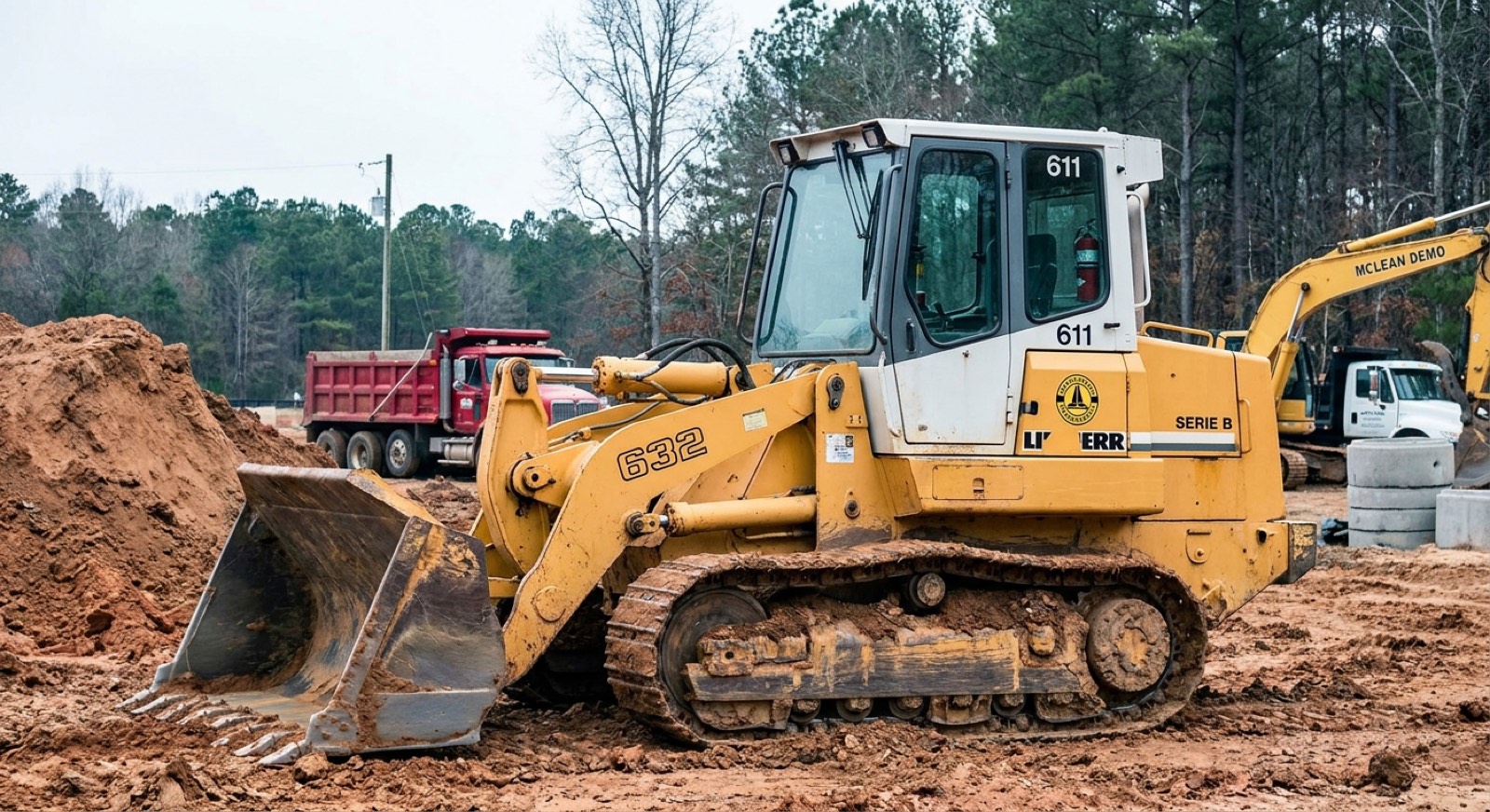
With permits in hand and utilities confirmed off, we mobilize equipment appropriate to the site. Arlington's tight lots often require compact excavators and skid-steers in the 5–8 ton range rather than full-size machines, and our fleet includes equipment sized for urban residential and commercial work. Debris is hauled off-site on a same-day or next-morning basis to keep the property clean and alley access open for neighbors. Final grade is established to county stormwater management specifications, and we provide documentation of the completed work for your records and your builder's use.
Arlington's high property values, compact lots, and older housing stock create a demolition cost environment somewhat elevated compared to outer Northern Virginia suburbs, primarily due to ACM abatement requirements and urban logistics. The ranges below reflect typical Arlington conditions; actual costs depend on structure size, ACM content, site access, and project complexity.
| Service | Scope | Estimated Cost | Notes |
|---|---|---|---|
| Full House Demolition | Complete teardown to grade, debris removal | $9,400–$19,800 | ACM abatement often adds cost in pre-1980 Arlington homes |
| Interior / Selective Demo | Full gut or partial interior removal | $2–$8/sq ft | High demand in Clarendon and Buckingham renovation projects |
| Pool Full Removal | Complete concrete removal and backfill | $7,000–$16,000 | Less common in Arlington but present on larger lots |
| Hot Tub Removal (above-ground) | Disconnect, break down, and haul | $150–$800 | Alley access often required for Arlington backyard units |
| Concrete Removal | Driveway, patio, or slab removal | $2–$6/sq ft | Common on teardown lots being cleared for new construction |
| Deck and Patio Removal | Wood deck or concrete patio demolition | $2–$5/sq ft | Tight rear yards in Westover and Lyon Village often require hand work |
| Chimney Removal | Stack-only or full chimney teardown | $1,000–$10,000 | Many Lyon Village and Westover colonials have original masonry chimneys |
| Site Preparation and Grading | Post-demo grading and compaction | $1,300–$5,600 | Arlington County stormwater management requirements apply |
| Debris Removal | Per-load haul-off to licensed facility | $100–$800/truckload | Same-day haul-off standard in Arlington due to tight staging areas |
| Asbestos Abatement | Licensed ACM removal and disposal | $5–$20/sq ft | Required before demolition in pre-1980 Arlington structures |
Arlington County DES requires a demolition permit for all structure removals. Commercial demolition and projects disturbing significant land area require additional documentation. Contact McLean Demolition for a permit cost estimate specific to your Arlington project.
McLean Demolition has been serving Arlington County for 14 years, completing projects from small interior gut jobs in Clarendon to full residential teardowns in Lyon Village and Aurora Hills. Our Class A DPOR license, direct working relationship with Arlington County DES, and experience managing ACM abatement in the county's pre-1980 housing stock make us the reliable choice for Arlington demolition work.

Arlington County presents a set of demolition conditions unlike any other Northern Virginia jurisdiction, driven by its urban density, aging housing stock, and distinct permitting process through Arlington County DES rather than the Fairfax County LDS system most Northern Virginia contractors are accustomed to. Understanding these differences is essential to running a project that stays on schedule and on budget.
The ACM profile in Arlington's residential stock is significant. Homes built from the 1930s through the late 1970s in neighborhoods like Lyon Village, Westover, Buckingham, and Nauck commonly contain multiple categories of asbestos-containing materials. Nine-inch vinyl floor tiles installed throughout mid-century slab homes are the most common ACM finding, but pipe insulation on older steam and hot water heating systems, joint compound on drywall and plaster surfaces, vermiculite in attic insulation, and asbestos-cement exterior siding are all documented in the Arlington housing inventory. NESHAP regulations require a licensed inspector survey before any demolition that could disturb more than 160 square feet or 260 linear feet of regulated ACM, and abatement must be completed by a licensed contractor before structural demolition begins. We coordinate both the survey and abatement as part of our standard pre-demolition process, with no gaps in the chain of documentation.
Arlington County DES is the permitting authority for demolition in the county, and their process differs from Fairfax County's PLUS online portal in important ways. The DEMOC demolition permit application requires a site plan, utility disconnection confirmations from all utility providers, a completed building assessment form, and, for commercial structures, the results of an ASHRAE 100 hazardous material survey. Permit review times are generally 2–4 weeks for standard residential projects. Properties in certain Lyon Village blocks and the Maywood historic district may require additional review by the county's historic preservation office before a demolition permit can be issued, a step that can add 2–4 additional weeks if not anticipated. We flag these situations during our initial site assessment to prevent schedule surprises.
Urban lot constraints are a daily operational reality in Arlington. Many residential lots are 5,000–7,500 square feet with structures built close to the property line, leaving minimal space for equipment staging and debris accumulation. Alley access at the rear of properties is the standard approach for equipment entry in neighborhoods like Lyon Village and Westover, but alley widths vary and some are not rated for heavy equipment without temporary ground protection plating. We assess site access during our initial estimate visit and specify the right equipment for each job. Compact excavators in the 5–8 ton range, skid-steers, and mini-loaders are standard in our Arlington toolkit. Neighboring structures must be protected from vibration during demolition, particularly in the densely built blocks near Ballston and Clarendon where party walls and shared fences are common.
Commercial demolition in Rosslyn, Ballston, and Shirlington adds further complexity. ASHRAE 100 hazardous material surveys are required for pre-2000 commercial structures, and the scope can involve lead paint in commercial finishes, PCB-containing light fixture ballasts, and mercury thermostats in addition to ACMs. Urban commercial sites often have underground infrastructure including abandoned fuel storage tanks, old utility vaults, and footings from prior structures that are not shown on current drawings. We include a pre-construction underground utility investigation in our commercial project process to reduce the risk of encountering these conditions during active demolition. Arlington County stormwater management requirements also apply to commercial demo sites where land disturbance exceeds 2,500 square feet, requiring an approved ESC plan and stormwater controls in place before work can begin.
McLean Demolition serves every neighborhood in Arlington County, from the urban core near Rosslyn and Ballston to the residential communities of Cherrydale, Aurora Hills, and Nauck. Our crews are familiar with the access conditions, housing types, and permit requirements throughout the county.
Lyon Village's early-20th-century bungalows and colonials are among the most common teardown candidates in Arlington, with full residential demolition and ACM abatement the most frequent services here.
Ballston's active residential and commercial renovation market drives demand for interior and selective demolition in townhomes, condos, and commercial buildout spaces near the Metro corridor.
Rosslyn's commercial redevelopment corridor generates significant demand for commercial demolition, interior selective demo, and structural teardown on older office and retail buildings.
Clarendon's mixed-use redevelopment and residential infill creates work for both commercial demolition and interior gut jobs in older structures being repositioned for new tenants or owners.
Shirlington's village-format retail and residential mix requires precision commercial demolition and interior demo coordinated around active neighboring businesses and pedestrian areas.
Buckingham's mid-century apartment and single-family stock is in active renovation, with interior demolition of original kitchens, baths, and finishes the most common project type here.
Cherrydale's post-war bungalows on mid-size lots are seeing teardown-rebuild activity as rising land values make new construction financially attractive for property owners.
Westover is home to pre-1960 construction where asbestos abatement is frequently required alongside residential demolition, making experienced contractor coordination especially important.
Nauck is experiencing growing renovation investment, with older bungalows and ranchers being gutted or torn down as the neighborhood continues to attract new homeowners.
Aurora Hills homeowners frequently undertake full gut renovations and teardowns on 1950s–1970s homes, with interior demolition and full residential teardown the primary services requested.