McLean, VA & Fairfax County

Asbestos Abatement in McLean, VA

McLean Demolition coordinates full asbestos abatement services for residential and commercial properties throughout McLean and Fairfax County. We arrange certified inspector site assessments, manage Fairfax County miscellaneous abatement permits, deploy licensed abatement crews with HEPA filtration and negative pressure containment, and schedule the required clearance air testing before mechanical demolition resumes.

Interior asbestos-containing material (ACM) removal runs $5 to $20 per square foot. Most residential projects in McLean range from $1,200 to $3,500 for common ACM locations including floor tile, pipe insulation, joint compound, and ceiling texture. Whole-house pre-teardown abatement for larger homes can reach $5,000 to $15,000 depending on ACM volume and material types.

A pre-demolition inspection costing $300 to $600 is the most cost-effective risk management available on any pre-1980 McLean home. The consequences of disturbing asbestos fibers mid-demolition — a stop-work order, remediation costs, and health liability — far exceed the inspection cost. Call (571) 506-2219 to schedule a consultation.

(571) 506-2219

Get a Free On-Site Estimate

Why McLean Demolition for Asbestos Abatement Coordination

We manage the full asbestos abatement process from certified inspection through licensed removal to clearance air testing, so your demolition or renovation project proceeds safely and on schedule. One point of contact handles the inspection, permit, abatement crew, and the mechanical demolition that follows.

  • Certified asbestos inspector site assessment with bulk samples sent to accredited lab — 3 to 5 business day results
  • Fairfax County miscellaneous abatement permit filed and managed on your behalf before any removal work begins
  • Licensed abatement crews operating under Virginia Code §54.1-500 with full HEPA filtration and negative pressure containment
  • Third-party clearance air testing after abatement — the legal requirement before mechanical demolition can resume
  • Coordination between abatement and demolition phases so project timeline is compressed as much as possible
  • AHERA-compliant protocols for commercial projects; residential pre-demo inspection recommended for all pre-1980 structures
  • Class A DPOR licensed demolition contractor — abatement is coordinated as part of a complete demo project, not a separate contractor relationship
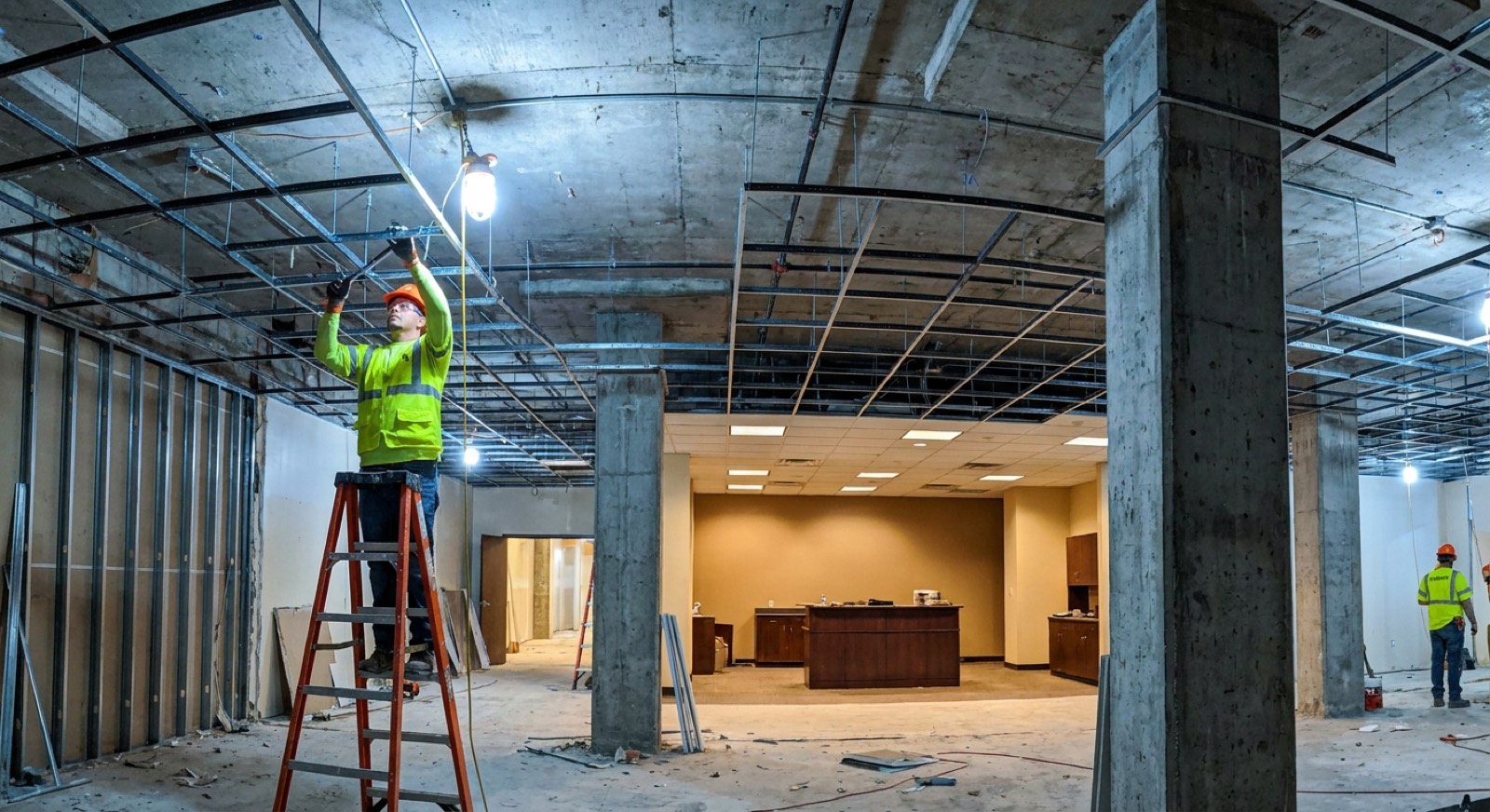
Asbestos abatement coordination in McLean VA
600+
Projects Completed
14
Years of Experience
5.0
Star Google Rating
20+
Cities Served

Asbestos Abatement Services in McLean, VA

From the initial certified inspection through licensed abatement and final clearance air testing, McLean Demolition manages every phase of the asbestos abatement process before mechanical demolition begins.

Pre-Demo Asbestos Inspection

$300–$600 per inspection

A certified asbestos inspector performs a visual assessment of all suspect materials, takes bulk samples from each ACM type identified, and ships the samples to an accredited laboratory for analysis. Results are typically returned within 3 to 5 business days. The inspection report identifies each ACM by location, material type, condition, and recommended action — abatement or encapsulation.

Virginia does not mandate residential asbestos inspection by law, but Fairfax County strongly recommends it before any demolition permit is issued, and many lenders and insurers require it as a condition of policy. The inspection cost of $300 to $600 is minimal compared to the cost of a stop-work order and emergency abatement required when ACMs are discovered mid-demolition. McLean Demolition arranges the inspection as a standard step on all pre-1980 projects.

Interior ACM Removal

$5–$20 per sq ft

Interior asbestos-containing materials are the most common ACM type found in McLean homes built before 1980. The most frequently identified materials are 9x9 vinyl asbestos floor tiles, pipe insulation wrap on HVAC and plumbing systems, joint compound and drywall tape used in finished walls and ceilings, and popcorn ceiling texture applied through the 1970s. Each material type requires different handling procedures and removal rates under Type I, II, or III operations as classified by Virginia abatement regulations.

The licensed abatement crew establishes full negative pressure containment with HEPA filtration before any ACM is disturbed. Workers wear appropriate personal protective equipment and follow decontamination procedures upon exiting the containment zone. All removed ACM is packaged in approved sealed containers, labeled, and transported to a licensed hazardous waste disposal facility with a proper waste manifest documenting the chain of custody.

Exterior Asbestos Siding Removal

$50–$150 per sq ft

Exterior asbestos-containing siding — most commonly in the form of Transite cement panels on flat-roof garages or asbestos-cement shingles on older residential structures — requires a higher level of containment and more careful handling than interior ACMs, which drives the higher cost per square foot. The entire exterior must be wet-suppressed and contained before removal begins to prevent fiber release to the surrounding environment. Neighbors and adjacent properties must be notified in advance per Fairfax County abatement permit requirements.

Exterior abatement adds significant complexity and time to a project compared to interior removal. Containment must account for wind and weather conditions, and the sheer volume of material on a whole-house exterior abatement can be substantial. For homes being demolished rather than renovated, the full encapsulation or removal decision is weighed carefully — in many full-teardown scenarios, abatement immediately before mechanical demolition is the most efficient approach.

Clearance Air Testing

Third-party required after abatement

Clearance air testing is required by Fairfax County and Virginia state regulations before mechanical demolition can resume following asbestos abatement. An independent third-party environmental consultant — not the abatement contractor — collects air samples from the containment area after the abatement crew has completed work and the area has been visually inspected. Samples are analyzed by an accredited laboratory and results are compared to the regulatory threshold for airborne asbestos fiber concentration.

If clearance air testing passes, the containment is removed and mechanical demolition proceeds. If a sample fails, the abatement crew re-cleans the area and testing is repeated. McLean Demolition coordinates the timing between abatement completion, clearance testing, and mechanical demo crew scheduling to minimize project downtime. The clearance test result is documented and retained with the project file as part of the regulatory compliance record.

Signs Your Property Needs an Asbestos Inspection Before Demo

Any of these indicators means a pre-demolition asbestos inspection should be scheduled before any renovation or demolition work begins. An inspection at $300 to $600 is far less costly than a stop-work order and emergency abatement.

How Asbestos Abatement Coordination Works

McLean Demolition manages the abatement process as an integrated phase of the demolition project. We coordinate every step so mechanical demolition proceeds on schedule once abatement is complete and clearance testing passes.

1

Certified Inspector Site Assessment

A certified asbestos inspector performs a complete visual survey of the structure, identifies all suspect ACMs, and collects bulk samples for laboratory analysis. Lab results are returned in 3 to 5 business days and the inspection report outlines each identified ACM by type, location, and condition.

2

Abatement Permit Application

If ACMs are identified, McLean Demolition files for the required Fairfax County miscellaneous abatement permit through Land Development Services. Permit processing adds time to the project timeline — we account for this in the overall schedule from the start so there are no unexpected delays.

3

Licensed Abatement Crew

The licensed abatement contractor establishes full HEPA filtration and negative pressure containment before any ACM is disturbed. Workers follow Type I, II, or III removal procedures as required by material type, package all removed ACM in sealed labeled containers, and transport waste to a licensed disposal facility with proper manifesting documentation.

4

Clearance Air Testing & Project Resumption

After abatement is complete, an independent third-party consultant collects clearance air samples. Once results confirm fiber concentrations are below the regulatory threshold, mechanical demolition or renovation work resumes. McLean Demolition coordinates crew scheduling to minimize the gap between clearance approval and demo commencement.

Asbestos Abatement Cost Guide — McLean, VA

These price ranges reflect typical McLean-area asbestos abatement costs as of 2026. Actual project cost depends on ACM type, square footage, accessibility, and number of material types requiring removal. Call (571) 506-2219 for a project consultation.

Service / ACM Type Typical Cost Range Notes
ACM Inspection & Sampling $300–$600 Lab results in 3–5 business days
Vinyl Floor Tile Abatement $5–$10 per sq ft Includes mastic adhesive removal
Pipe Insulation Removal $10–$20 per linear ft Higher end for friable or deteriorated material
Joint Compound & Drywall ACM $8–$15 per sq ft Full wall assembly removal if drywall contains ACM
Popcorn Ceiling Texture $3–$7 per sq ft Wet scraping method under full containment
Exterior Siding (Transite) $50–$150 per sq ft Full exterior containment required; neighbor notification
Whole-House Pre-Demo Abatement $5,000–$15,000 Multiple ACM types; adds 5–10 business days to timeline
Emergency Abatement $1,500 mobilization + Stop-work order situations; expedited permit processing

Full Abatement vs. Encapsulation

For properties undergoing demolition, full abatement is nearly always required. For renovation projects where ACMs will remain in the structure, encapsulation may be a code-compliant alternative — but comes with ongoing management obligations.

Full Abatement

  • ACMs physically removed from the structure
  • Required before any mechanical demolition
  • Clearance air testing confirms safety
  • No ongoing monitoring or management obligation
  • Clean disclosure for property sale
  • No ACM disclosure required after completion

Encapsulation

  • ACMs remain in place — sealed, not removed
  • Not acceptable for structures being demolished
  • Requires periodic inspection and re-encapsulation
  • Ongoing management plan required under Virginia regulations
  • Must be disclosed in property sale transactions
  • Lower upfront cost but ongoing liability and expense

Asbestos Abatement in McLean, Virginia

McLean is one of the most active residential demolition and renovation markets in Northern Virginia, and it is also one of the markets with the highest concentration of pre-1980 housing stock. Neighborhoods including The Langley, Salona Village, Chesterbrook, and McLean Hamlet were developed primarily between the 1950s and the mid-1970s — precisely the construction era during which asbestos-containing materials were used most extensively. McLean Demolition works in these neighborhoods regularly and understands the material types that appear most frequently in each era of construction.

The most common scenario we encounter is the discovery of asbestos-containing materials after a homeowner or general contractor has already begun demolition work without a pre-demo inspection. When Fairfax County Land Development Services inspectors observe disturbed ACMs at a job site, they are required to issue a stop-work order and the project cannot resume until a licensed abatement contractor has contained and removed the materials, clearance air testing has passed, and documentation has been submitted to the county. Emergency mobilization for abatement in a stop-work situation adds $1,500 or more in mobilization costs alone, and the total delay typically runs two to three weeks — not counting the cost of the general contractor's idle time. A pre-demo inspection at $300 to $600 eliminates this risk entirely.

Virginia does not currently mandate asbestos inspection before residential demolition by statute, but Fairfax County strongly recommends it as part of the DEMOR permit process, and many title companies, lenders, and homeowner's insurers require an inspection as a condition of coverage or loan approval. For commercial properties, the AHERA (Asbestos Hazard Emergency Response Act) protocol requires a certified building inspector to survey the structure before any renovation or demolition — there is no commercial exemption.

The active teardown market in McLean — where older homes are purchased for lot value and demolished to make way for custom new construction — creates a high volume of pre-demo abatement projects every year. Custom home builders working on teardown projects in Evermay, Ballantrae, and Evans Mill coordinate asbestos inspections as a standard pre-construction step. McLean Demolition integrates abatement coordination into the demo project timeline so builders receive a single point of contact for inspection scheduling, permit filing, abatement crew deployment, and mechanical demolition. This eliminates the coordination overhead of managing two separate contractors.

Virginia Code §54.1-500 governs contractor licensing for asbestos abatement, and all abatement work in the state must be performed by contractors holding a Class A, B, or C asbestos contractor license issued by the Virginia Department of Professional and Occupational Regulation. McLean Demolition coordinates with DPOR-licensed abatement contractors for all abatement work and maintains the project documentation required for regulatory compliance. Call (571) 506-2219 to discuss your project and schedule an initial consultation.

Asbestos Abatement FAQ

How much does asbestos abatement cost in McLean, VA?
Asbestos abatement runs $5 to $20 per square foot for interior materials. A certified inspection with lab sampling costs $300 to $600 and is the necessary first step. Most residential McLean projects — covering common ACM locations like floor tile, pipe insulation, joint compound, and ceiling texture — run $1,200 to $3,500. Whole-house pre-demolition abatement for larger homes can reach $5,000 to $15,000. Exterior Transite siding is the most expensive type at $50 to $150 per square foot due to containment complexity. Call (571) 506-2219 for a project-specific estimate.
What happens if asbestos is found during demolition?
Mechanical demolition must stop immediately. Virginia law and Fairfax County regulations require asbestos-containing materials to be abated by a licensed contractor before mechanical work can resume. We will have the area tested by a certified inspector, file for the required miscellaneous abatement permit, coordinate the licensed abatement crew, and schedule clearance air testing after abatement is complete. This process typically adds 5 to 10 business days to the project timeline, plus the emergency mobilization cost premium. The pre-demo inspection at $300 to $600 prevents this scenario entirely.
Are all pre-1980 McLean homes required to have asbestos testing?
Virginia does not mandate residential asbestos inspection by law. However, Fairfax County strongly recommends it before issuing DEMOR permits, and many lenders, insurers, and title companies require it as a condition of coverage or loan approval. Practically, any McLean home built before 1980 should be inspected before demolition or major renovation — the cost of a stop-work order and emergency abatement if ACMs are discovered mid-project is orders of magnitude greater than the $300 to $600 inspection cost. Commercial properties have no exemption; AHERA mandates inspection before all commercial demolition and renovation.
How long does asbestos abatement take to complete?
The certified inspection takes one day on-site, followed by 3 to 5 business days for lab results. If ACMs are identified, the Fairfax County miscellaneous permit application adds time before abatement can legally begin. The abatement work itself takes 1 to 5 days depending on ACM volume and material types. Clearance air testing adds another day for sample collection and 1 to 2 days for lab results. In total, from inspection scheduling to clearance approval, plan for 10 to 20 business days. McLean Demolition builds this timeline into the project schedule at the outset so demolition can proceed without extended delays.
What are the most common asbestos-containing materials in McLean homes?
The most frequently identified ACMs in McLean's 1950s to 1970s housing stock are: vinyl asbestos floor tiles in 9x9 inch grid patterns and the black mastic adhesive beneath them; spray-applied popcorn ceiling texture; joint compound used in all drywall finishing through approximately 1977; pipe insulation wrap on steam heating and HVAC systems; and corrugated Transite cement panels on flat-roof garages and outbuildings. A certified inspector surveys all suspect materials and sends bulk samples to an accredited lab — you receive a written report identifying each ACM by location, type, and condition before any abatement decision is made.
Does McLean Demolition perform the abatement itself, or subcontract it?
Asbestos abatement must be performed by a contractor holding a DPOR asbestos contractor license — a separate license from the Class A demolition contractor license McLean Demolition holds. We coordinate the abatement phase by arranging the certified inspection, managing the Fairfax County permit, and deploying a DPOR-licensed abatement contractor as part of the integrated project. After clearance air testing passes, McLean Demolition's demolition crew completes the mechanical work. You have one project manager and one point of contact for the full scope, rather than separately hiring an abatement contractor and a demolition contractor.

Schedule an Asbestos Inspection Before Your McLean Demo Project

McLean Demolition coordinates pre-demolition asbestos inspections and full abatement services for residential and commercial properties throughout McLean and Fairfax County. Call today to discuss your project timeline and get a consultation at no charge.

(571) 506-2219
(571) 506-2219