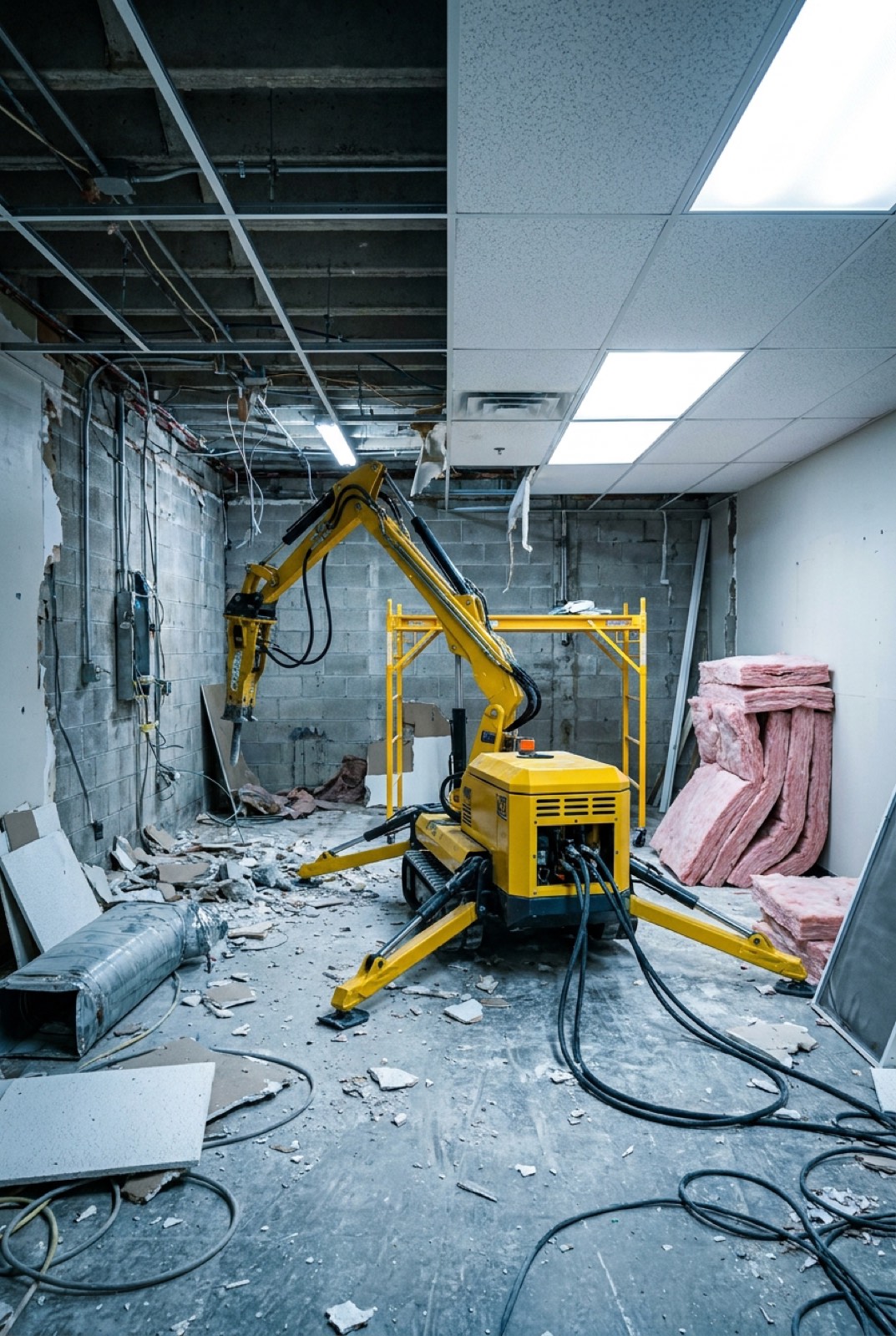
McLean Demolition performs interior demolition and selective gut-outs for residential and commercial properties throughout McLean and Fairfax County. Selective demolition — also called soft demolition or soft-strip — removes specific interior components including drywall, flooring, tile, fixtures, ceilings, and mechanicals while leaving the structural shell intact and ready for the renovation contractor. Pricing runs $2 to $8 per square foot for living areas and $8 to $20 per square foot for kitchens and bathrooms.
McLean's 1960s through 1980s housing stock in neighborhoods like Chesterbrook, Franklin Park, and McLean Hamlet is in an active renovation cycle. Many of these homes require a full interior gut-out before a remodel contractor can begin their scope. A typical 500 sq ft kitchen gut-out runs $3,500 to $6,500 including all debris removal and haul-away.
Pre-1978 homes often have lead-based paint on interior surfaces, requiring contained demolition procedures under OSHA 29 CFR 1926.850. Load-bearing wall removal requires structural engineer coordination and a Fairfax County building permit. McLean Demolition handles both. Call (571) 506-2219 for a free on-site estimate.
We perform interior gut-outs, soft-strips, and selective demolition for renovation contractors, homeowners, and commercial tenants throughout McLean and Fairfax County. Load-bearing walls are identified before work begins, lead paint procedures are followed on pre-1978 structures, and every job is left clean and ready for the next trade.
From a complete floor-to-ceiling gut-out of a 1960s ranch to a targeted kitchen or bathroom demo before a remodel, McLean Demolition delivers clean, debris-free spaces ready for the next contractor's scope.
A full interior gut-out removes all drywall, flooring, ceilings, insulation, and non-structural interior partitions while leaving the foundation, framing, and exterior sheathing intact. This is the standard first step for a comprehensive renovation where the homeowner or contractor wants to start from a bare-stud shell. Living areas including bedrooms, hallways, dining rooms, and living rooms run $2 to $5 per square foot for gut-out labor and debris removal.
On homes built before 1978, lead-based paint on interior trim and drywall requires contained demolition procedures — HEPA vacuum cleanup and proper disposal of lead-containing debris. Pre-1980 homes may also have asbestos in flooring, ceiling texture, or joint compound, requiring an inspection and abatement before the gut-out proceeds. McLean Demolition assesses hazmat conditions at the site visit and incorporates any required procedures into the project scope and pricing.
Kitchen and bathroom demolition is priced higher than general living area gut-outs because of the density of material — tile walls and floors, built-in cabinetry, countertops, plumbing fixture disconnection and capping, appliance removal, and ventilation hood detachment. A 500 sq ft kitchen gut-out including cabinets, tile, appliances, and plumbing rough-in exposure typically runs $3,500 to $6,500. Bathrooms with full tile surrounds run $2,000 to $4,500 for a standard 60 sq ft bath.
We coordinate with your plumber and electrician on disconnection timing so plumbing and electrical are capped before we begin and the mechanicals are exposed at the right point in the sequence. Cabinet removal is performed carefully to preserve the surrounding drywall if the renovation does not call for a full gut. All tile, grout, countertops, cabinetry, and debris are bagged, loaded, and hauled in the same trip as the demo work.
Removing a load-bearing wall is a structural modification that requires a licensed structural engineer to specify the replacement beam, a Fairfax County DPZ building permit under Virginia Uniform Statewide Building Code Section 3404, and temporary shoring to support the floor or roof system above while the wall is removed and the beam is installed. The cost of $3,000 to $8,000 reflects the engineering coordination, permit, shoring, wall removal, and beam pocket preparation — the beam itself and finish carpentry are typically part of the general contractor's scope.
McLean Demolition marks all load-bearing elements before any interior demo begins. We identify walls by their structural role — load-bearing walls run perpendicular to floor joists and carry weight from the floor system or roof above to the foundation — and confirm with the engineer before removing any wall that shows ambiguous characteristics. Unauthorized removal of a load-bearing wall without shoring can cause immediate structural failure. Every load-bearing wall removal we perform includes proper shoring and engineer-approved sequencing.
Soft-strip selective demolition removes specific interior components while leaving others intact. This is the method used when a contractor needs ceilings removed but floors preserved, or when one room is being gutted while the adjacent room remains occupied. It is also the standard approach for commercial tenant improvement projects where MEP systems must be selectively removed without disturbing active systems serving other tenant spaces. The precision of soft-strip work requires more planning and care than a full gut-out, which is reflected in pricing.
Common soft-strip scopes include drywall removal only, ceiling assembly removal while preserving MEP rough-ins, flooring removal without subfloor damage, and fixture removal without wall demolition. For commercial projects, soft-strip often involves a detailed scope of work prepared by the building's architect or tenant improvement contractor that identifies every element to be removed and every element to remain. McLean Demolition follows the scope document precisely and flags any conditions not anticipated in the original plan before proceeding.
Interior demolition done correctly creates a clean, safe starting point for your renovation contractor. Done incorrectly, it creates structural damage, hazmat exposure, and debris that delays the entire project. Here is when to call a professional.
When a renovation contractor's scope starts with bare studs — new electrical, new plumbing, new insulation, new drywall — the interior gut-out is the first task. Most general contractors do not perform their own demo, and many prefer to work with a dedicated demolition crew that delivers a clean shell on a fixed schedule. McLean Demolition coordinates closely with renovation contractors to deliver the gut-out on the timeline the general contractor's schedule requires.
Many kitchen and bathroom remodelers, flooring contractors, and custom builders require that the space be gutted before they arrive to begin their installation work. If your renovation contract specifies that the homeowner is responsible for demo, or if your contractor has quoted demo separately, McLean Demolition can perform the gut-out and haul-away on the schedule your contractor needs. We work directly with the GC or trade contractor to confirm exactly what needs to be removed and what needs to be preserved.
Water damage from a burst pipe, roof leak, or flooding requires removal of all affected drywall, insulation, and flooring to allow the structure to dry and prevent mold from spreading to unaffected areas. Fire damage requires a more extensive gut-out to remove smoke-damaged, charred, and structurally compromised materials before the structure can be assessed for repair scope. Both situations require careful documentation and coordination with the homeowner's insurance adjuster before demo begins.
Converting a garage to living space, a basement to a finished recreation room, or a bedroom to a home office or bathroom often requires removing the existing floor, wall, and ceiling assemblies before new construction can begin. These conversions often involve reconfiguring interior partitions and may require load-bearing wall evaluation when the project modifies the structural layout of the floor plan. McLean Demolition scopes these projects carefully and ensures structural elements are identified before any framing is touched.
Kitchen and bathroom remodels almost always require a professional demo crew because of the concentration of tile, plumbing rough-ins, cabinetry, and mechanicals in a small space. Attempting to remove tile, cabinets, and plumbing without proper sequencing and containment often results in damaged subfloor, broken supply lines, and dust contamination throughout the home. A professional demo crew performs the gut-out in the correct sequence, caps all utilities, and leaves the space clean for the remodel contractor's first day.
Commercial tenant improvements in Tysons, McLean, and the surrounding Fairfax County office market routinely require interior gut-outs before new tenant build-out can begin. Suspended ceilings, raised access floors, partition walls, and tenant-installed MEP systems must be removed without disturbing the building's base systems serving other tenants. OSHA 29 CFR 1926.850 governs commercial demolition safety, and McLean Demolition's OSHA 30-hour certified crew follows all required safety protocols on every commercial project.
McLean Demolition follows a four-step process for every interior gut-out and selective demo project. Structural assessment and dust containment setup happen before any demolition begins, protecting the structure and the occupants of adjacent spaces.
Before any interior demolition begins, the crew walks the scope with the project manager and marks all load-bearing walls, beams, and structural posts. For any walls identified as load-bearing that are in the demolition scope, we coordinate with a structural engineer before proceeding and confirm permit requirements with Fairfax County DPZ.
HEPA filtration units and plastic barrier containment are installed before demolition begins to prevent dust from migrating to occupied or adjacent spaces. On pre-1978 homes with lead-based paint, full contained procedures under OSHA 29 CFR 1926.850 are established, including negative air pressure where required. Flooring in egress paths is protected.
Demolition proceeds according to the agreed scope — targeted selective removal or full gut-out. Materials are sorted during removal: metal framing and plumbing for scrap recycling, drywall and insulation for C&D disposal, tile and concrete for aggregate recycling, wood framing and trim for disposal. Lead-containing debris is bagged separately with proper waste manifesting documentation.
All debris is loaded and hauled from the site in a single mobilization in most cases. The space is swept, HEPA vacuumed, and left in a clean condition ready for the renovation contractor's first day of work. We confirm the completed scope with the general contractor before leaving the site and address any punch-list items on the same visit.
These price ranges reflect typical McLean-area interior demolition costs as of 2026. Actual project pricing depends on scope, material density, hazmat conditions, and access. Call (571) 506-2219 for a free on-site estimate with a written fixed-price quote.
| Project Type | Typical Cost Range | Notes |
|---|---|---|
| Living Area Gut-Out | $2–$4 per sq ft | Drywall, flooring, ceilings; no tile or plumbing |
| Kitchen Gut-Out | $8–$15 per sq ft | Cabinets, countertops, tile, appliances, plumbing exposure |
| Bathroom Demo | $10–$20 per sq ft | Tile surround, fixtures, vanity, flooring |
| Load-Bearing Wall Removal | $3,000–$8,000 | Includes engineering coordination, permit, shoring, removal |
| Basement Gut-Out | $3–$6 per sq ft | Higher end if tile floor or finished ceilings present |
| Garage Interior | $2–$5 per sq ft | Drywall, ceiling panels, storage shelving removal |
| Commercial Office Gut-Out | $5–$12 per sq ft | Suspended ceilings, partition walls, raised floors |
| Hazmat Soft-Strip (lead/asbestos) | +$5–$20 per sq ft | Added to base rate; contained procedures and manifested disposal |
The right approach depends entirely on the renovation scope. Understanding the difference helps you and your contractor set the right expectations and avoid either over-removing or under-removing before the renovation begins.
McLean's housing stock is entering one of the most active renovation cycles in the area's history. The neighborhoods of Chesterbrook, Franklin Park, McLean Hamlet, and Salona Village were built out primarily in the 1960s and 1970s with homes that are now 50 to 60 years old. Buyers in this market are increasingly choosing renovation over teardown — either to preserve larger homes that would be costly to rebuild, or because they want to remain in the home during a phased renovation rather than relocating during new construction. Interior demolition is the first step in virtually every comprehensive renovation project of this type.
The 1960s and 1970s construction vintage present specific hazardous material considerations for interior demolition. Homes built before 1978 almost certainly have lead-based paint on interior trim, window frames, doors, and possibly on drywall finishes. OSHA 29 CFR 1926.850 requires that contractors performing demolition on these surfaces follow contained work practices — establishing negative air pressure containment, wearing appropriate respiratory protection, and managing lead-containing debris under proper disposal procedures. McLean Demolition's crew is trained in lead-safe work practices and follows required OSHA protocols on every pre-1978 interior demo project.
Pre-1980 McLean homes also frequently contain asbestos in the floor tile, joint compound, and ceiling texture. An asbestos inspection before interior gut-out is standard practice on any home from this era. If ACMs are found during the inspection, licensed abatement must be completed before the interior demolition crew can begin mechanical work. McLean Demolition coordinates the inspection and, if needed, the abatement as a preliminary step in the project so the renovation timeline is not disrupted by unexpected mid-project discoveries.
Load-bearing wall removal is a common component of McLean interior renovations. The original floor plans of 1960s and 1970s McLean homes often feature compartmentalized layouts — separate formal living room, dining room, kitchen, and family room — that today's homeowners want to open into a single great room format. Removing the walls between these spaces requires structural engineering to size the replacement beam, a Fairfax County DPZ building permit, and temporary shoring during the removal and beam installation. Virginia Uniform Statewide Building Code Section 3404 governs alterations to existing structures, including load-bearing wall modifications. McLean Demolition handles the permit coordination and structural engineer engagement as part of the wall removal scope.
For commercial clients in Tysons and the Fairfax County office market, McLean Demolition performs interior gut-outs for tenant improvement projects under AHERA-compliant protocols when ACMs are present. OSHA 29 CFR 1926.850 governs all commercial interior demolition work, and our OSHA 30-hour certified crews maintain all required safety standards on every commercial project. Call (571) 506-2219 to discuss your interior demolition scope and receive a free on-site estimate.