McLean, VA — Fairfax County

Excavation Services in McLean, VA

McLean Demolition operates Caterpillar and Hitachi ZX series excavators for residential and commercial site excavation throughout McLean and Fairfax County, delivering precise foundation digging, pool excavation, drainage trenching, and subgrade preparation with AASHTO T180 compaction testing included on every structural project. Our crews have deep experience with Northern Virginia's expansive piedmont clay soils, which expand and contract 15 to 30 percent with moisture changes and require proper compaction documentation before any foundation contractor can proceed. Every dig starts with mandatory Virginia 811 utility locating under Code §56-265.17, filed at least three business days before excavation begins.

Our excavation scope covers residential foundation digging for new homes and additions, inground pool and spa excavation, French drain and utility trenching, cut-and-fill grading, topsoil stripping and stockpiling, benchmark elevation setting, spoils removal, and import fill delivery and placement. Whether you are breaking ground on a custom home in McLean Hamlet or correcting a drainage problem along the Georgetown Pike corridor, one licensed crew handles the entire scope in-house — no subcontractors, no handoffs.

Excavation rates in Northern Virginia run $240–$420 per hour for a mid-size machine with operator. Residential foundation digs total $3,000–$8,000 depending on depth and soil conditions. Pool and spa excavation runs $2,000–$5,000. Call (571) 506-2219 for a free on-site estimate with no obligation.

Get a Free Estimate

Why McLean Demolition is the Best at Excavation

Northern Virginia's piedmont clay soils undermine foundations, drainage systems, and finished grades when excavation is done without the right equipment, proper compaction testing, and local soil knowledge. McLean Demolition brings the credentials, machines, and site experience to get every excavation project right before the next contractor steps on the site.

  • Class A DPOR-licensed contractor — the highest classification issued by Virginia's Department of Professional and Occupational Regulation, required for structural work over $120,000
  • Caterpillar and Hitachi ZX series excavators operated by experienced, background-checked crews on every project — not rental machines driven by unlicensed labor
  • AASHTO T180 Modified Proctor compaction testing included on all structural excavation — test results delivered to your foundation contractor before the site is handed over
  • Virginia 811 utility notification completed on every project without exception; we document the ticket number and confirm flags before any machine moves
  • Spoils removal and import fill managed in-house at $250–$450 per load — no coordinating a separate hauler or waiting for a fill supplier
  • Hydraulic breaker available on-site for rock encountered in deep excavations below approximately six feet — no project delay waiting on a specialty subcontractor
  • Excavation, demolition, and site grading handled by one crew, one schedule, one invoice — no gaps between contractors during your critical path phases
Caterpillar excavator performing site excavation in McLean, VA
600+
Projects Completed
14
Years in Northern Virginia
5.0
Stars on Google
20+
Cities Served

Excavation Services in McLean & Fairfax County

From residential foundation digging to pool excavation and drainage trenching, McLean Demolition provides site excavation for every scope and soil condition in Northern Virginia.

Foundation Excavation

Residential foundation digging for new custom homes, additions, and accessory structures in McLean typically runs $3,000–$8,000, with excavation depth and soil conditions as the primary cost variables. Northern Virginia piedmont clay presents a higher-resistance environment than sandy soils, which adds machine hours on deep cuts compared to sites in other regions.

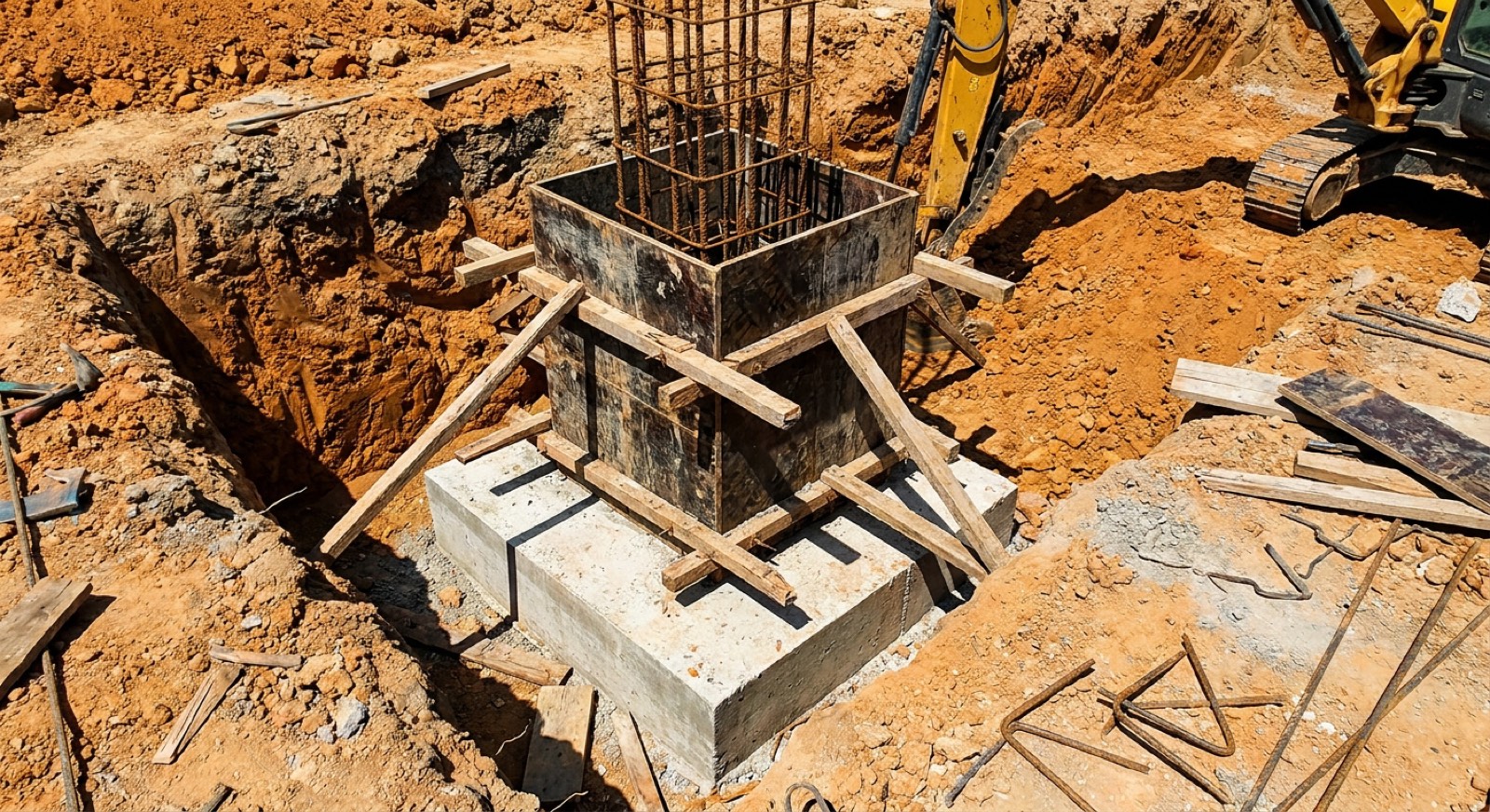
Our crews strip and stockpile topsoil separately so it can be redistributed during final grading, and all foundation edges are cut clean and plumb to the engineer's benchmark elevation before the formwork contractor arrives. AASHTO T180 compaction testing confirms 95 percent maximum density on the excavation floor, and we provide the written test report before handing over the site. Spoils are removed at $250–$450 per load or staged on-site based on the project's reuse plan.

Pool & Spa Excavation

Inground pool and spa excavation in McLean runs $2,000–$5,000 for a standard residential pool footprint, depending on pool dimensions, depth, and site access. Clay soils in Fairfax County require careful spoils management — excavated clay is dense and heavy, and over-excavation must be controlled to prevent settlement under the pool shell and surrounding deck.

We coordinate excavation timing directly with the pool contractor to ensure the pit is maintained cleanly and the construction schedule stays aligned. Rock lines encountered in deep pool excavations are broken with a hydraulic breaker attachment at $150–$250 per hour additional, avoiding a project delay for a specialty subcontractor. Every pool excavation includes a site survey to confirm the finished bottom elevation meets the structural drawing before the pool crew mobilizes.

Drainage Trenching

French drain and utility trenching runs $40–$80 per linear foot in McLean and Fairfax County, reflecting the labor-intensive work of cutting through compacted clay subsoil. Standing water problems in Northern Virginia commonly trace to piedmont clay's low permeability — the soil holds water against the surface rather than letting it percolate, creating chronic wet-yard and wet-foundation conditions.

A properly functioning French drain requires a trench cut at consistent slope (minimum 1 percent grade), clean crushed-stone bedding, and a perforated pipe installed without low points that trap standing water in the line itself. We work from a drainage engineer's design or advise on layout from site observation. Utility trenches for electrical conduit, water service, and gas line extensions follow the same per-linear-foot pricing, and all trenches are backfilled with compacted material to prevent future settlement.

Site Grading & Compaction

Cut-and-fill grading establishes the design elevation for a building pad, driveway, or yard drainage plan by moving soil from high points to low points, minimizing the need for material import or export. Our Komatsu PC series and Caterpillar machines handle grading on lots of any size, from tight suburban parcels in McLean Hamlet to large estate lots along the Georgetown Pike corridor.

Every structural grading project includes AASHTO T180 Modified Proctor compaction testing, targeting 95 percent of theoretical maximum density in each compaction lift. Erosion and sediment control measures are installed and maintained in compliance with Fairfax County ESC requirements throughout the grading phase. Import fill is available when on-site borrow material is insufficient, delivered and placed at $200–$400 per load, with final subgrade elevations verified against the project benchmark before the foundation or paving contractor takes over.

Signs You Need a Professional Excavation Contractor in McLean, VA

Northern Virginia homeowners frequently encounter situations where rental equipment is insufficient and where clay soil conditions, utility density, or structural requirements make professional excavation the only safe and documentable path forward.

Our Excavation Process

Every excavation project in McLean and Fairfax County follows a four-step sequence that ensures permit compliance, utility safety, proper machine execution, and compaction verification before the next contractor arrives on site.

1

Site Survey & Soil Assessment

We visit the site before pricing, review project drawings, confirm benchmark elevation, and assess soil conditions. Clay content, topography, access constraints, and depth to rock all affect excavation time and cost — we account for all variables before writing the estimate.

2

Virginia 811 Utility Locate Notification

Under Virginia Code §56-265.17, excavation cannot begin until Virginia 811 is notified at minimum three business days in advance. We file the notification, document the ticket number, and confirm utility locator flags on-site before any machine touches the ground.

3

Mechanical Excavation

Our Caterpillar or Hitachi ZX excavator is mobilized and excavation proceeds to the design elevation. Spoils are staged on-site for reuse or loaded for off-site disposal at $250–$450 per load. Rock encountered below approximately six feet is handled with a hydraulic breaker attachment at $150–$250 per hour additional.

4

Compaction Testing & Subgrade Prep

After excavation reaches the design grade, AASHTO T180 Modified Proctor compaction testing confirms 95 percent theoretical maximum density. We provide the written compaction report to your foundation or paving contractor and complete final subgrade preparation — trimming, shaping, and fine-grading to the engineer's tolerance.

Excavation Cost Guide — McLean & Fairfax County

The following price ranges reflect 2026 market rates for excavation services in the McLean, VA and Fairfax County area. Actual project costs depend on excavation depth, soil conditions, spoils volume, site access, and whether rock is present.

Service Price Range Notes
Residential Foundation Dig $3,000–$8,000 New home or addition; includes compaction testing
Pool / Spa Excavation $2,000–$5,000 Standard residential footprint; rock surcharge if applicable
Drainage Trenching $40–$80/LF French drain or utility trench; per linear foot
Footing Excavation $25–$60/LF Strip footings for walls, additions, and accessory structures
Excavation Rate (Machine + Operator) $240–$420/hr Mid-size excavator; most residential jobs 8–16 machine hours
Spoils Removal $250–$450/load Hauled to licensed disposal facility; piedmont clay is heavy per load
Import Fill / Borrow Material $200–$400/load Delivered and placed; structural fill or topsoil available
Compaction Testing Included AASHTO T180 included on all structural excavation; written report provided

Professional Excavation vs. Rental Equipment DIY

Homeowners sometimes consider renting a mini excavator or skid steer to handle smaller digs. Here is an honest side-by-side of what each approach actually delivers on a Fairfax County clay-soil site.

McLean Demolition Professional Excavation

  • Virginia 811 utility notification filed, documented, and flags confirmed before any dig
  • Written AASHTO T180 compaction test report delivered to foundation contractor
  • Full-size excavator reaches depths of 14+ ft cleanly in piedmont clay
  • Hydraulic breaker attachment available on-site for unexpected rock — no delay
  • Spoils hauled to licensed facility at $250–$450/load — no on-site stockpile management
  • Benchmark elevation verified with survey instrument; clean, plumb cut edges
  • Class A licensed; general liability and workers' compensation insurance in place
  • ESC plan compliance maintained throughout the excavation phase

Rental Equipment DIY

  • Virginia 811 compliance falls on the operator personally; violations carry civil penalties under Code §56-265.17
  • No compaction test documentation; foundation contractor may refuse to pour without it
  • Mini excavators are typically limited to 8–10 ft depth in firm clay before stability becomes a concern
  • Rock requires a hydraulic breaker; rental mini-excavators rarely include this attachment
  • Spoils must be hauled separately, adding trailer rental, multiple dump trips, and disposal fees
  • Grade control without a survey instrument results in uneven bottom elevations the foundation contractor must correct
  • Rental rate plus insurance plus trailer plus dump fees often exceeds a professional bid on residential jobs
  • Property damage from a utility strike is uninsured without licensed contractor coverage

Excavation in McLean, VA: Clay Soils, Custom Builds, and Doing It Right

McLean, Virginia sits in the piedmont province of Northern Virginia, a geological zone defined by dense, expansive clay soils that behave differently than the sandy loam found in coastal or valley areas. These soils expand when wet and contract when dry, with volumetric changes of 15 to 30 percent depending on clay content and how dramatically moisture cycles through the seasons. For excavation contractors, this means every project — from a residential foundation to a drainage trench to a pool dig — demands an understanding of how Northern Virginia clay responds to disturbance, loading, and recompaction before it can be trusted to support a structure.

Fairfax County's AASHTO T180 Modified Proctor compaction standard targets 95 percent of theoretical maximum density for structural fills and subgrades. This requirement exists precisely because piedmont clay compacted to less than this threshold will continue to settle over time, causing differential settlement under foundations, pavement, and retaining structures. McLean Demolition includes AASHTO T180 compaction testing on every structural excavation project and provides the written test report to the foundation contractor before the site is handed over — eliminating the most common delay point between the excavation phase and the concrete phase.

McLean's real estate market creates an unusually high volume of residential excavation work. The city carries one of the highest average home values in the country at approximately $2.2 million in 2026, and buyers regularly purchase mid-century homes throughout The Langley, McLean Hamlet, Salona Village, Evans Mill, and the Georgetown Pike corridor specifically for lot value. Once the existing structure is demolished, the lot is excavated and graded to receive a custom new construction home of 5,000 to 11,000 square feet or more. Multiple active teardown and rebuild projects are visible throughout these neighborhoods at any given time, and McLean Demolition serves both the homeowners commissioning these projects and the custom builders managing them.

Pool excavation is another steady component of McLean's excavation market. At this price point, inground pools, outdoor kitchen structures, and extensive hardscape are standard additions during new construction or major estate renovations. Pool excavation in McLean's clay soils requires care to control over-excavation — disturbed clay sidewalls that are inadequately backfilled can create voids that cause the pool deck and surrounding hardscape to settle months after the pool contractor finishes.

Virginia 811 under Code §56-265.17 requires all excavators to notify the 811 system at least three business days before any excavation begins. McLean and Fairfax County properties carry dense underground utility infrastructure: natural gas (Washington Gas), electric service (Dominion Energy), water and sewer lines (Fairfax Water), and telecommunications. A utility strike during excavation is a life-safety event with significant civil liability. Every McLean Demolition excavation project begins with a Virginia 811 notification, on-site utility flag review, and hand-digging near all marked utilities before machine work proceeds.

For custom home builders and their clients, choosing a single contractor for demolition, excavation, and site preparation eliminates the coordination overhead and scheduling risk of managing two or three separate crews through these early critical-path project phases. McLean Demolition handles the full sequence in-house — one call, one crew, one clean site ready for construction.
Excavation Services — Frequently Asked Questions

How much does excavation cost in Northern Virginia?
Excavation in Northern Virginia runs $240–$420 per hour for a mid-size excavator with an operator. Most residential projects — foundation digging, pool excavation, and drainage trenching — take 8–16 machine hours, putting typical project totals between $2,000 and $8,000 before spoils removal. A residential foundation excavation for a new home on a McLean lot typically totals $3,000–$8,000 depending on depth, soil conditions, and whether rock is present. Spoils removal adds $250–$450 per load. The best way to get an accurate number is a free on-site estimate — site access, depth, and clay density all affect the final machine-hour count.
What makes Northern Virginia soil challenging to excavate?
Northern Virginia sits on piedmont province clay soils that are dense, expansive, and prone to significant shrink-swell cycles with seasonal moisture changes — volumetric changes of 15 to 30 percent are common. This clay is harder to cut than sandy or loamy soils, which increases machine hours and reduces the volume of spoils that fit per load because wet clay is extremely heavy. After excavation, these soils require proper AASHTO T180 compaction testing at 95 percent theoretical maximum density before any structural load is applied — otherwise settlement over time is nearly certain. We account for soil type and moisture conditions in every excavation estimate and include compaction testing on all structural work.
What is Virginia 811 and why is it required before excavation?
Virginia 811 is the state's call-before-you-dig notification program, required by Virginia Code §56-265.17 before any excavation begins. Notification must be submitted at least three business days before the planned dig date, after which utility owners send locators to mark buried lines with colored flags on the ground. Natural gas, electric, water, sewer, and telecommunications lines all run through McLean and Fairfax County properties at varying depths, and a utility strike can cause explosions, electrocution, flooding, or significant civil liability. McLean Demolition files the Virginia 811 notification on every project, documents the ticket number, confirms all utility flags on-site, and hand-digs near marked lines before machine work proceeds.
What is compaction testing and why does the foundation contractor need it?
Compaction testing per AASHTO T180 (the Modified Proctor method) measures the dry density of soil after it has been compacted and compares it to the theoretical maximum density achievable for that soil type. The standard for structural fills and subgrades in Fairfax County is 95 percent of theoretical maximum density. Foundation contractors require this documentation because concrete footings poured over insufficiently compacted fill will experience differential settlement over time, leading to foundation cracking, wall movement, and structural damage. The test is performed on-site by a technician using a nuclear density gauge or sand-cone method, and McLean Demolition provides the written test results before handing over any structural excavation.
What happens if rock is hit during excavation?
Rock is occasionally encountered in Northern Virginia excavations at depths below approximately six feet, particularly in areas with shallow bedrock transitions. When our excavator reaches rock that a standard bucket cannot penetrate efficiently, we attach a hydraulic breaker — essentially a large pneumatic hammer mounted on the excavator arm — to fracture the rock in place before removing the pieces. The hydraulic breaker adds $150–$250 per hour to the machine rate. We alert the project owner or builder as soon as rock is identified, confirm the additional cost, and continue without project delay. Rock volume is measured and reported as part of the final project documentation.
Do I need a permit for excavation in Fairfax County?
Excavation that is part of a permitted construction project — a new home, an addition, a pool — is covered under the associated building permit and does not require a separate excavation permit. Grading or land disturbance involving more than 2,500 square feet in Fairfax County may require an Erosion and Sediment Control (ESC) plan and permit from Fairfax County Land Development Services, particularly on slopes exceeding 15 percent. Utility trenching may require a separate ROW permit if the trench runs through a county right-of-way. McLean Demolition evaluates permit requirements at the site visit and handles all applicable applications as part of the project scope.

Ready to Start Your Excavation Project in McLean?

Get a free on-site estimate from McLean's licensed excavation contractor. We bring the machines, the compaction testing, and the Virginia 811 paperwork — you just plan what comes next.

Request Free Estimate (571) 506-2219
(571) 506-2219