McLean Demolition is a Class A DPOR-licensed demolition contractor serving Falls Church, VA with 14 years of experience and more than 600 completed projects throughout Northern Virginia. Falls Church is an independent city with its own permitting jurisdiction, and our team works directly with the City of Falls Church Community Development and Planning Department to file and manage all required demolition permits. We serve the full range of demolition needs in Falls Church, from full residential teardowns in Westover and Jefferson Manor to interior gut jobs on mid-century bungalows in Pimmit Hills and concrete removal on Lake Barcroft-area properties.
Falls Church property owners trust McLean Demolition for residential demolition, interior and selective demolition, concrete removal, debris removal, asbestos abatement, deck and patio removal, chimney removal, shed and garage demolition, and site preparation and grading. The city's compact footprint, high property values, and 1950s–1970s housing stock create a strong teardown-rebuild and renovation market that we have been supporting for over a decade. We bring the right equipment, the right permits, and the right crew to every Falls Church project.
Full house demolition in Falls Church typically runs $9,400–$19,800 depending on structure size, ACM content, and site access conditions. Interior demolition runs $2–$8 per square foot, and concrete removal runs $2–$6 per square foot. Call (571) 506-2219 for a free on-site estimate and we will walk through the city permit requirements and project timeline specific to your Falls Church property.
McLean Demolition provides full-scope demolition, site clearance, and concrete removal services throughout the City of Falls Church and the adjacent Fairfax County and Arlington County communities. Our team is experienced with the city's independent permit process and the pre-1980 construction conditions common throughout Falls Church's residential stock.
Falls Church has one of the highest concentrations of teardown-rebuild activity in Northern Virginia, driven by premium lot values and aging 1950s–1970s bungalows, Cape Cods, and ramblers in Westover, Jefferson Manor, Tara-Leeway Heights, and Greenway Downs. We provide complete residential demolition from structure to grade, including below-grade slab and foundation removal, utility disconnection coordination, and post-demo site grading. The City of Falls Church Community Development and Planning Department issues all demolition permits, and we prepare and file the full application as part of our standard process. Pre-demolition hazardous material surveys are mandatory for pre-1980 construction, where asbestos shingles, linoleum ACMs, and pipe wrap are common findings throughout Jefferson Manor and Westover. Full residential teardowns in Falls Church typically cost $9,400–$19,800 depending on square footage and ACM content. Our crew leaves a clean graded lot ready for your custom builder.
Falls Church homeowners who choose renovation over teardown frequently need comprehensive interior demolition to clear aging systems, original finishes, and ACM-bearing materials before a modern gut renovation can begin. Our interior demolition crew removes non-structural walls, original flooring, drop ceilings, built-in cabinetry, plumbing fixtures, and old mechanical systems while protecting structural members and the building envelope. We use hand tools and compact powered equipment in the city's tight lots and older homes, where large equipment access is frequently limited. Interior demo in Falls Church runs $2–$8 per square foot depending on the scope and material complexity. The city requires a building permit for most interior demolition involving structural or utility work, and we file that through the City of Falls Church Community Development and Planning Department. We complete the work efficiently and dispose of debris at licensed Northern Virginia facilities.
Concrete removal is one of the most frequently requested services in Falls Church, where older driveways, sidewalks, and patios on teardown lots require full removal before new construction can begin. We remove concrete driveways, walkways, patios, pool decks, garage slabs, and foundation walls using hydraulic breakers, concrete pulverizers, and skid-steer mounted attachments sized to the access conditions on each Falls Church property. Pricing runs $2–$6 per square foot depending on concrete thickness, reinforcement type, and access. Driveway removal on a typical Falls Church lot runs $1,200–$4,500 depending on driveway size and condition. We haul all broken concrete to licensed recycling facilities where it can be processed into aggregate for base material, diverting waste from landfill disposal. Concrete removal permits are included in the overall demolition permit application where applicable.
Falls Church's compact lot sizes and active residential streets require disciplined debris management on every project we complete in the city. We haul mixed construction debris, concrete, masonry, wood framing, and stripped interior materials from job sites throughout Falls Church with same-day or next-day scheduling, priced at $100–$800 per truckload depending on material type and volume. For standalone debris removal on projects where a previous contractor left material on-site, we provide independent haul-off services with fast mobilization. Our trucks are sized for the city's residential streets, and we comply with all Falls Church and adjacent jurisdiction truck routing requirements. Material is sorted where possible to separate recyclable concrete, metal, and clean wood from general debris, reducing disposal costs and diverting material from landfill.
Falls Church is an independent city in Northern Virginia with a 2.2-square-mile footprint, completely surrounded by Fairfax and Arlington Counties. Its housing stock is predominantly mid-20th-century construction, with bungalows, Cape Cods, and ramblers from the 1940s–1960s in Westover and Jefferson Manor, and larger colonials and split-levels from the 1960s–1970s throughout Seven Corners, Pimmit Hills, and Tara-Leeway Heights. The Lake Barcroft community straddles the Falls Church-Fairfax County border, with waterfront properties on the lake and larger suburban lots that attract high-value renovation and teardown-rebuild projects. The city's proximity to the East Falls Church Metro station and to the Tysons and Ballston employment centers has pushed residential property values to among the highest in Northern Virginia, making teardown-rebuild economically compelling for owners of older small homes on well-located lots.
Falls Church is an independent city, which means its permitting authority is entirely separate from both Fairfax County and Arlington County. Demolition permits are issued by the City of Falls Church Community Development and Planning Department, not by Fairfax County LDS or Arlington County DES. This distinction is essential for project planning. Many demolition contractors who primarily work in Fairfax County are not familiar with the city's permit procedures, timelines, or application requirements, which can cause avoidable delays. McLean Demolition has direct experience with the city permit process and maintains working relationships with city staff, ensuring that applications are filed correctly and tracked through to issuance without handoffs or gaps.
The ACM profile in Falls Church's pre-1980 housing stock extends further than in communities built primarily in the 1960s and 1970s, because Falls Church has significant pre-1950s construction in Westover and Jefferson Manor where asbestos shingles on exterior siding, pipe wrap insulation, and ACM linoleum flooring are all commonly found. In addition to NESHAP requirements, lead paint in pre-1978 construction is pervasive in Falls Church and requires licensed testing and abatement for renovation and demolition projects. McLean Demolition coordinates both asbestos and lead abatement assessments as part of our pre-demolition process for all pre-1978 structures.
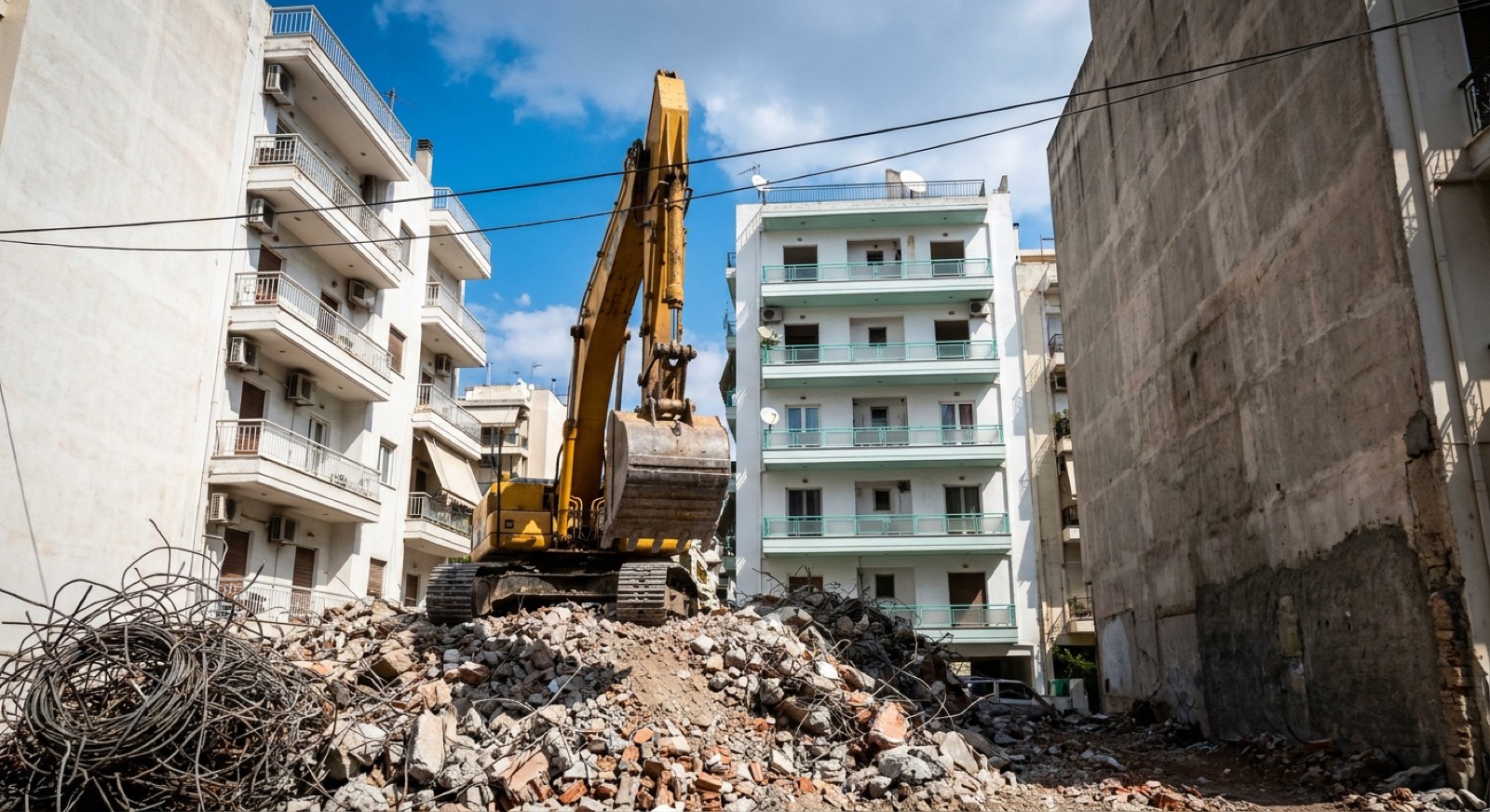
Every Falls Church project begins with a free on-site visit where we assess the structure, lot access, neighboring properties, and any specific conditions related to the Lake Barcroft riparian buffer or other site constraints. For pre-1980 structures, which covers the majority of Falls Church's housing stock, we coordinate a licensed asbestos and lead-paint survey that takes 3–5 business days to complete. The City of Falls Church Community Development and Planning Department requires ACM survey results and utility disconnection documentation before issuing a demolition permit. We document all findings and build abatement requirements into the project scope and pricing before work begins.
Demolition permits in Falls Church are issued by the City of Falls Church Community Development and Planning Department, which is entirely separate from Fairfax County LDS or Arlington County DES. We prepare and file the complete demolition permit application, including site plans, utility disconnection documentation, and ACM survey results, and we track the permit through city staff review to issuance. Standard residential permit turnaround in Falls Church typically runs 2–4 weeks. Projects near the Lake Barcroft watershed or in any sensitive land area may require review by additional city or county staff before the permit is issued.
Utility disconnection in Falls Church involves coordination with Dominion Energy, Washington Gas, the City of Falls Church Public Works for water and sewer, and Arlington County utilities where applicable for properties near the city boundary. Scheduling disconnections typically takes 2–4 weeks depending on utility provider availability. Where ACMs or lead paint are confirmed by the pre-demo survey, licensed abatement is completed before any structural demolition begins, with all waste removed by a licensed abatement contractor and transported to a licensed VDEQ facility. We verify all utility disconnections at the main before mobilizing demolition equipment.
Active demolition on a typical Falls Church bungalow or Cape Cod takes 1–3 days, with debris hauled off-site continuously to keep the lot clear and residential streets passable. Falls Church's compact lots require compact excavators and skid-steers similar to Arlington-scale urban work, with careful protection of neighboring structures and shared fences during structural demolition. Concrete driveways, walkways, and slabs are removed as part of the scope where required for new construction. Final site grade is established per city stormwater management requirements, and we provide documentation for your builder and the city's post-demo inspection.
Falls Church's high property values, pre-1950s through 1970s housing stock, and compact lot sizes create a demolition cost environment similar to Arlington. The ranges below reflect typical Falls Church conditions; actual project costs depend on structure age, size, ACM and lead content, and site access specifics.
| Service | Scope | Estimated Cost | Notes |
|---|---|---|---|
| Full House Demolition | Complete teardown to grade, debris removal | $9,400–$19,800 | Pre-1950s Westover and Jefferson Manor homes often have asbestos shingles and ACM linoleum |
| Interior / Selective Demo | Full gut or partial interior removal | $2–$8/sq ft | Common on Pimmit Hills and Seven Corners renovation projects |
| Pool Full Removal | Complete shell demolition and backfill | $7,000–$16,000 | Lake Barcroft properties require riparian buffer compliance review |
| Hot Tub Removal (above-ground) | Disconnect, break down, and haul | $150–$800 | Common on Falls Church renovation projects clearing rear yards |
| Concrete Removal | Driveway, patio, walkway, or slab removal | $2–$6/sq ft | Very high demand on teardown lots across Falls Church |
| Driveway Removal | Full concrete or asphalt driveway demo | $1,200–$4,500 | Often included in teardown scope; standalone removal available |
| Chimney Removal | Stack-only or full chimney teardown | $1,000–$10,000 | Common in Jefferson Manor and Westover colonials and Cape Cods |
| Site Preparation and Grading | Post-demo grading and stormwater prep | $1,300–$5,600 | City of Falls Church stormwater management requirements apply |
| Asbestos Abatement | Licensed ACM removal and disposal | $5–$20/sq ft | Required before demolition; higher ACM risk in Falls Church's pre-1950 stock |
Demolition permits in Falls Church are issued by the City of Falls Church Community Development and Planning Department — NOT Fairfax County or Arlington County. McLean Demolition files all permits directly with the city. Contact us for a permit cost estimate specific to your Falls Church project.
McLean Demolition has been working in Falls Church and surrounding Northern Virginia communities for 14 years, completing residential teardowns, interior gut jobs, and concrete removal projects throughout the city. Our Class A DPOR license, direct working relationship with City of Falls Church Community Development and Planning staff, and experience with the city's unique permit jurisdiction make us the right choice for Falls Church demolition projects.

Falls Church presents a set of demolition challenges that sets it apart from every other Northern Virginia jurisdiction, combining an independent city permit process, some of the oldest residential construction in the region, extremely high property values, compact lots, and the specific environmental conditions of the Lake Barcroft watershed.
The City of Falls Church's independent status as a separate jurisdiction from Fairfax and Arlington counties is the single most important factor contractors and property owners need to understand before starting a demolition project here. The City of Falls Church Community Development and Planning Department is the sole permitting authority for demolition in Falls Church. Contractors who file with Fairfax County LDS or Arlington County DES for Falls Church city addresses will be directed to refile with the city, wasting permit fees and adding weeks to the project timeline. Our familiarity with the city's permit application requirements, plan review process, and staff procedures means we file correctly the first time and track the application to issuance without delays that could push your builder's start date.
Falls Church's ACM risk profile extends further back in construction history than communities like Vienna or Herndon. Westover and Jefferson Manor have pre-1950s bungalows and Cape Cods that may contain asbestos-cement siding shingles, which are not a common finding in the 1960s–1970s Fairfax County housing stock but are well-documented in Falls Church's older neighborhoods. ACM linoleum flooring, commonly found in kitchens and bathrooms of 1940s–1960s construction, is a distinct material from the vinyl composition tile more common in later-decade homes, and it requires specific handling and disposal procedures. Pipe wrap insulation on steam and hot water heating systems, joint compound, and textured ceilings add to the ACM inventory in pre-1980 Falls Church homes. Lead paint in pre-1978 construction is also pervasive throughout the city and must be tested and abated before demolition and renovation work. We coordinate licensed surveys for both asbestos and lead as part of our pre-demolition process.
Falls Church's compact lot sizes, typically 5,000–10,000 square feet in the established neighborhoods of Westover, Jefferson Manor, and Tara-Leeway Heights, create the same urban demolition logistics challenges as Arlington. Equipment staging is limited, neighboring structures are close, and debris must be managed continuously rather than accumulated on-site. Shared fences and adjacent garages require careful protection during structural demolition. We assess these conditions during the initial site visit and specify equipment and staging plans accordingly. Compact excavators in the 5–8 ton range and skid-steers are standard for Falls Church residential work.
Lake Barcroft is one of the most distinctive features of the Falls Church area, with waterfront properties on the lake in an area that straddles the Falls Church city boundary and Fairfax County. Excavation, grading, and site restoration work near Lake Barcroft is subject to riparian buffer requirements administered by Fairfax County's stormwater management program, which restricts clearing, grading, and impervious surface additions within setback distances from the shoreline and its tributaries. Projects near the lake require a pre-construction review of applicable buffer requirements, and in some cases a separate Fairfax County stormwater permit in addition to the City of Falls Church demolition permit. We identify these conditions during our initial site assessment and include the necessary permit coordination in the project scope. Unplanned disturbance in a riparian buffer can trigger costly stop-work orders and remediation requirements.
The teardown-rebuild economics in Falls Church are among the most compelling in Northern Virginia. With land values in the city frequently exceeding $800,000 for a standard residential lot, the cost of demolishing an aging 1,200-square-foot bungalow at $9,400–$19,800 and building new represents a small fraction of the overall project investment. This economics profile has driven sustained teardown activity in Westover, Jefferson Manor, and Seven Corners over the past decade, with no signs of slowing. Falls Church's top-rated public school system, walkable downtown, and Metro access continue to attract buyers willing to invest in new construction, making it one of the most active demolition markets in our service area.
McLean Demolition serves every neighborhood in Falls Church and the adjacent areas that border the city in Fairfax and Arlington counties. Our crews know the access conditions, housing types, and permit requirements throughout the city and the broader Falls Church area.
Westover has Falls Church's oldest housing stock, with pre-1950s bungalows that frequently contain asbestos shingles and ACM linoleum, making experienced permit and abatement coordination essential before teardown.
Jefferson Manor's mid-century bungalows and Cape Cods are among the most active teardown-rebuild candidates in Falls Church, with full residential demolition and ACM abatement the most frequently requested services.
Pimmit Hills homeowners frequently choose comprehensive interior demolition on their 1960s ranchers as an alternative to teardown, stripping original finishes and systems for a full gut renovation.
Lake Barcroft waterfront properties require riparian buffer compliance review for excavation and site restoration work, and McLean Demolition coordinates that review as part of the permit process.
West Falls Church near the Metro station is seeing increased renovation and teardown-rebuild activity as transit-oriented demand drives up land values in this walkable corridor.
Seven Corners is a high-activity area for both residential teardown and concrete removal on older lots being cleared for new construction or commercial redevelopment.
Tara-Leeway Heights has a mix of 1950s–1970s colonials and split-levels where interior demolition and full teardown work is increasingly common as homeowners invest in the strong Falls Church market.
Greenway Downs homeowners on larger lots are seeing strong teardown-rebuild economics, with full residential demolition and lot clearing the most frequent service requested here.