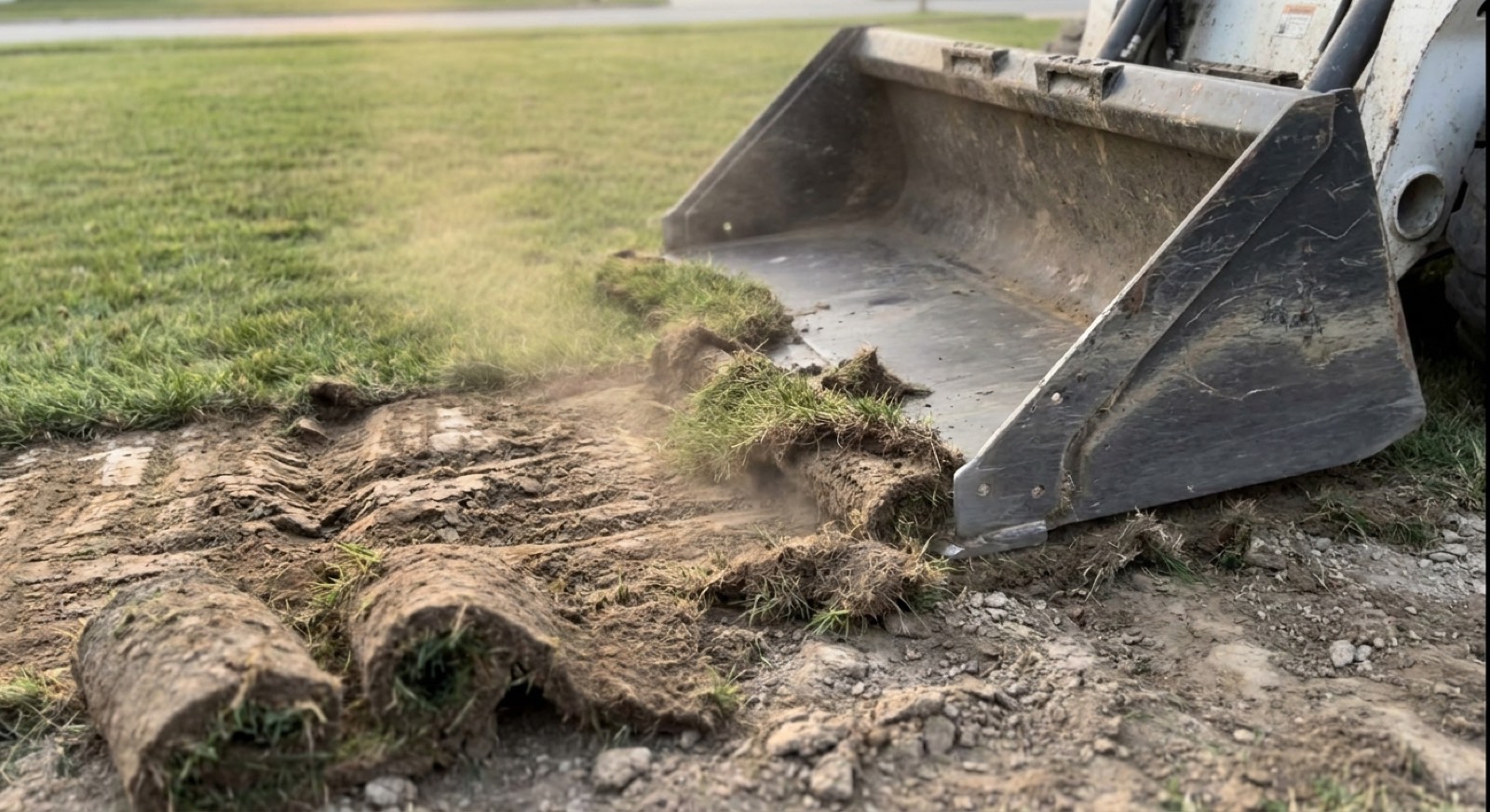
McLean Demolition removes decks, patios, concrete flatwork, and fences throughout McLean, Fairfax County, and Northern Virginia. Deck removal runs $2–$5 per square foot including all demo labor and debris hauling. Concrete patio and flatwork removal is $2–$6 per square foot. Fence removal is priced at $3–$6 per linear foot. Most residential decks of 200–500 square feet are demolished and hauled in a single day.
We handle wood decks, composite decks (Trex, TimberTech, Azek), multi-level structures, and decks attached to masonry or brick homes that require careful ledger removal to avoid wall damage. Post footings are extracted as part of every deck removal, and concrete patio slabs are broken and recycled as C&D aggregate at licensed facilities.
Fairfax County requires a demolition permit for decks over 256 square feet attached to the main structure, and for permanent accessory structures such as pergolas with fixed footings. McLean Demolition confirms permit requirements at the site visit and handles applications when needed. Call (571) 506-2219 for a free same-week estimate on your deck, patio, or fence removal project.
Deck and patio removal sounds simple until you discover concrete footings that go three feet down, ledger boards bolted through brick veneer, or composite decking that requires different handling than wood. McLean Demolition removes every configuration of deck, patio, and fence in Fairfax County with same-day completion for most standard residential projects.
Every deck material, patio type, and fence configuration removed cleanly and hauled same day for most projects in McLean and Fairfax County.
Wood deck removal runs $2–$4 per square foot, placing a standard 300 sq ft deck in the $600–$1,200 range including all demolition labor and debris hauling. The process begins with removing decking boards, then the framing members, then the ledger board, and finally extracting post footings from the ground. Pressure-treated lumber from decks built before 2004 may contain CCA (chromated copper arsenate), which requires disposal at facilities permitted to handle special waste. McLean Demolition identifies pre-2004 CCA lumber at the site visit and routes it appropriately. Metal connectors, joist hangers, and fasteners are sorted and scrapped. Wood material is hauled to a permitted transfer facility. A 300 sq ft wood deck is typically demolished and cleared in half a day to a full day depending on footing count and ledger complexity.
Composite deck removal runs $3–$5 per square foot, slightly higher than wood due to the volume and weight of composite decking boards and the fastener density that brands like Trex, TimberTech, and Azek use. Composite decking cannot be recycled and must be taken to a permitted landfill or transfer facility, which generates higher disposal costs than recyclable wood. Composite boards are dense and heavy, requiring more loading effort and truck weight per square foot than pressure-treated lumber. The framing system under most composite decks is still pressure-treated lumber, which follows the same handling protocol as wood decks. McLean Demolition includes all decking material removal, framing teardown, ledger removal, and post footing extraction in composite deck removal quotes. Multi-level composite decks with integrated lighting or built-in benches add complexity and are priced individually at the site visit.
Concrete patio removal runs $2–$6 per square foot depending on slab thickness and whether the concrete is reinforced with rebar or wire mesh. Unreinforced residential patio slabs (4 inches thick) fall on the lower end. Reinforced slabs, stamped concrete, or thick pool-deck concrete fall on the higher end due to rebar extraction labor. A typical 400 sq ft concrete patio costs $800–$2,400 to remove, including breaking, loading, and hauling to a concrete recycling facility. Concrete is classified as C&D recyclable material and is crushed into aggregate for road base and fill rather than sent to a landfill, which keeps disposal costs lower than mixed waste. McLean Demolition uses a hydraulic breaker attachment on a mini excavator for most residential patio slabs. For very tight access areas, we can use a pneumatic or electric demolition hammer and hand-load the material.
Fence removal is priced at $3–$6 per linear foot including post extraction and debris hauling. Wood privacy fences, chain link, aluminum, vinyl, and split-rail fences are all within scope. Post extraction is the most labor-intensive part of fence removal, particularly for wooden posts set in concrete footings where the footing must be broken and removed from the ground. Steel T-posts and wooden posts without concrete can be pulled with a post puller attachment. Chain link fence includes post caps, tension wire, rails, and fabric removed and scrapped as metal. Vinyl fence sections and posts are hauled to a transfer facility. Wood fence material is hauled to a permitted wood waste or C&D facility. Most residential fence removals of 200–400 linear feet are completed in a single day. McLean Demolition includes all post footings in the fence removal quote — there is no additional charge for extracting set-in-concrete posts.
McLean Demolition follows a four-step process for deck, patio, and fence removal projects in McLean and Fairfax County.
We visit the property, measure the scope, check equipment access routes, and confirm Fairfax County permit requirements. Decks over 256 sq ft attached to the main structure require a demolition permit. We note any CCA lumber, ledger attachment complexity, or footing depth that affects labor and pricing. A written quote is provided before any work is scheduled.
Decking boards are removed first, then the framing members, railings, and stairs. The ledger board is carefully detached from the house structure, with special care given to decks attached to masonry or brick veneer walls where improper removal can damage the wall surface. All material is loaded for hauling throughout the disassembly phase.
Post footings are broken and extracted from the ground. Concrete footings for decks are typically 12–24 inches in diameter and 24–48 inches deep, requiring a breaker or excavator to dislodge. All footings are removed flush with or below grade so the area is flat and clear. For patios, the slab is broken with a hydraulic breaker attachment and all concrete pieces are loaded for recycling.
All material is sorted for appropriate disposal routing: concrete to recycling, metal hardware to scrap, wood to permitted transfer facility. CCA lumber is kept separate and handled as special waste. The site is swept, the house wall is inspected for any ledger anchor holes that need weather sealing, and the area is left clean and flat. Most projects complete hauling same day as demolition.
Pricing below reflects current Fairfax County area rates. All McLean Demolition quotes include permit confirmation, all demolition labor, footing extraction, and debris hauling. Call (571) 506-2219 for a free on-site estimate.
| Service | Price Range | Notes |
|---|---|---|
| Small Deck — 200 sq ft | $600–$1,000 | Wood or composite; footings and hauling included |
| Standard Deck — 300 sq ft | $700–$1,500 | Most common residential deck size; 1-day job |
| Large Deck — 500 sq ft | $1,000–$2,500 | Composite on high end; 1–2 days |
| Multi-Level Deck | Quoted per level | Price depends on levels, materials, and footing count |
| Concrete Patio Removal | $2–$6/sq ft | Recycled as C&D aggregate; reinforced on high end |
| Fence Removal | $3–$6/LF | All fence types; concrete post footings included |
| Post & Footing Extraction | Included in all quotes | Concrete footings broken and removed; no hidden charge |
| Debris Hauling | Included in all quotes | Site clear and clean; no debris left behind |
Some McLean homeowners consider DIY deck removal to save money. Here is an honest comparison of what is involved in each approach.
McLean and the surrounding Fairfax County communities see consistent demand for deck and patio removal driven by the area's active renovation and new construction market. Mid-century homes in Salona Village, Chesterbrook, Franklin Park, and McLean Hamlet frequently have wood decks installed in the 1980s and 1990s that have reached the end of their useful life. These decks are typically framed with pressure-treated lumber that may include CCA (chromated copper arsenate), a preservative used in residential pressure-treated lumber until 2004 when it was voluntarily phased out by manufacturers.
CCA-treated lumber must be handled as special waste at disposal and cannot be burned or sent to standard landfills without documentation. McLean Demolition identifies pre-2004 CCA lumber at the site visit and routes it to facilities permitted to handle treated wood waste. This is not an uncommon situation in McLean's older housing stock, and it is one of the reasons DIY deck removal on older homes carries more complexity than it appears.
Northern Virginia's climate accelerates deck deterioration relative to drier climates. The combination of humid summers, freeze-thaw cycling from November through March, and mature tree canopy that keeps deck surfaces damp creates ideal conditions for wood rot, joist decay, and composite board delamination. A deck that looks cosmetically acceptable from the surface often has rotted joists or compromised ledger connections at the house attachment point. McLean Demolition's site visit always includes inspection of the ledger board and framing condition, not just the decking surface, before quoting.
Decks in McLean that are attached to masonry or brick veneer homes present a specific ledger removal challenge. The ledger board is typically through-bolted into the brick or into a wood sill plate behind the masonry veneer. Improper removal risks cracking the brick face or leaving exposed anchor holes that become water infiltration points. McLean Demolition uses careful sequencing and appropriate pry technique to remove ledger boards from masonry structures without wall damage. After removal, anchor holes are sealed with exterior-grade caulk or mortar plug as appropriate.
Fairfax County's permit requirement for decks over 256 square feet is a detail that DIY removers often miss. The requirement applies to decks attached to the main structure, not freestanding platforms. If your deck is over this threshold and is attached to the house, McLean Demolition will confirm the permit requirement at the site visit and file the application as part of the project. Permit fee is typically $50–$200. We do not begin demolition on permitted scopes until the permit is issued.
McLean Demolition serves McLean, Great Falls, Vienna, Oakton, Fairfax, Reston, Falls Church, Herndon, Arlington, and all of Fairfax County. We also serve Loudoun County and Prince William County communities. Call (571) 506-2219 for a free estimate on your deck, patio, or fence removal. Most estimates can be scheduled within 24–48 hours of your call.